
6 March 2025 · 7 min read · Last updated 17 September 2026
Which Renovations Add Value in Amsterdam, and Which Do Not
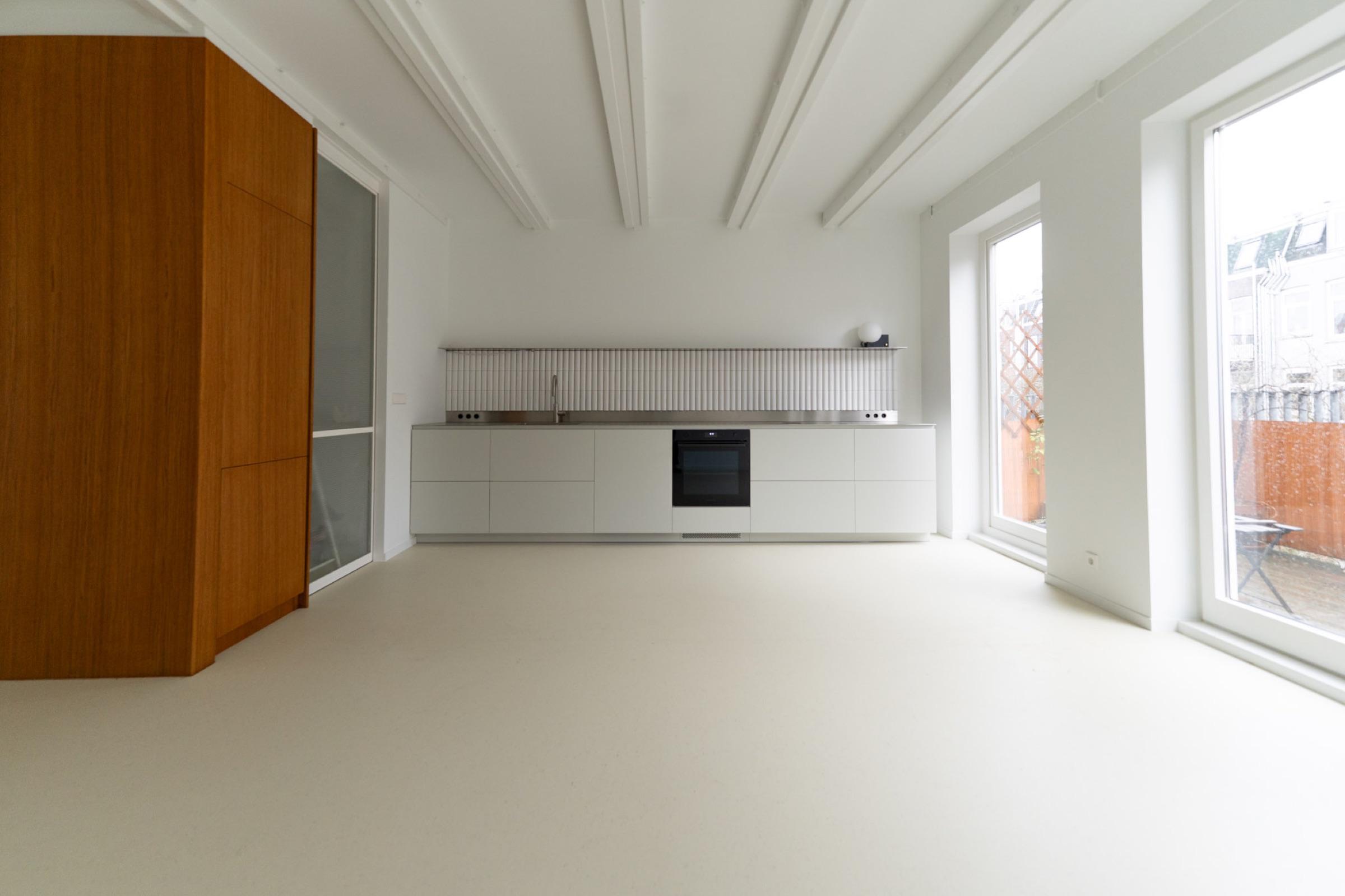
It comes up near the end of almost every first meeting: if we spend this, do we get it back when we sell? The honest answer in Amsterdam and Noord-Holland is that part of a renovation budget comes back fairly reliably, part of it mainly buys a faster and calmer sale, and part is spent purely on how you want to live. Three different kinds of money, and mixing them up is how people end up disappointed.
How value is actually measured here
When a buyer needs a mortgage, the number that counts is not your invoice total. It is the figure in a validated taxatierapport, written by an appraiser working from recent comparable sales in your postcode and building type. The report has a fixed structure: usable floor area measured per the NEN 2580 meetinstructie, a maintenance assessment per building element, and a sustainability section recording the registered energy label and the measures the appraiser thinks the home still needs.
Two things follow. Anything that does not appear in those fields is hard to credit, and the comparison is with the street rather than with your ambitions: every neighbourhood has a ceiling price that reference sales keep pulling you back towards. Value also has a running cost, since a higher WOZ assessment means higher onroerendezaakbelasting.
The three moves that pay back most reliably
1. Floor area that legally counts as living space
Amsterdam prices follow square metres more closely than anything else, so adding usable area is the most dependable way to move a valuation. A dakkapel, a dakopbouw, a rear uitbouw or an attic turned into a proper room all add measurable m2 - provided the area counts. Under the meetinstructie, floor with less than 1.5 m of headroom does not count at all, and an attic reached by a loose ladder is storage until it has a fixed staircase. The room then still has to satisfy the Bbl on daylight, escape route and ceiling height before anyone can market it as a bedroom.
Check what is allowed before you draw anything. A roof extension may need an omgevingsvergunning, the VvE and the splitsingsakte decide whether the roof is yours to use at all, and in a protected streetscape the rear facade can be assessed as carefully as the front. Our framework on what triggers a permit, a monument review or a VvE vote belongs at the design stage. Where the roof volume already exists, converting a loft is usually the cheapest square metre you will ever buy here.
2. The energy label
Energy performance now carries legal and financial weight. Rented homes have to reach at least label D by 2029, and in the woningwaarderingsstelsel labels E, F and G carry negative points, which directly caps the rent that may be charged. Lenders allow extra borrowing room for energy measures within the annual lending rules, the Nationaal Warmtefonds lends at low interest to owners and to VvEs, and ISDE subsidies cover insulation and heat pumps at amounts set again each year.
The work follows a familiar order: crawl space and floor, then walls, then roof, then glazing, with ventilation designed in at every step rather than bolted on afterwards. Tightening a house without a ventilation strategy is how you get mould behind a beautiful new wall, and our guide to keeping an insulated Amsterdam home dry covers the sequence. One date belongs in the plan: net metering for solar power ends on 1 January 2027, which shifts the arithmetic towards self-consumption, storage and a heat pump rather than feeding the grid.
3. Repairs that would otherwise become a deduction
The least glamorous category and the most reliable. Foundation trouble, a roof at the end of its life, rotten frames, damp in a souterrain, a fuse board with no earthing or asbestos in a duct all surface in a building survey, and buyers do not deduct the cost of the repair. They deduct the cost, plus the risk, plus the inconvenience, and then they negotiate. Amsterdam's timber pile foundations make this sharper than elsewhere: funderingsherstel is disruptive, commonly runs into six figures for a whole house, and a known problem can freeze a sale completely. Fixing it does not make your home worth more than a healthy one. It stops it being worth much less.
What a new kitchen or bathroom really does
Kitchens and bathrooms matter, but not in the way older marketing copy suggests. A dated bathroom is priced by buyers as a job they will have to do, so replacing it removes a deduction and widens the pool of people willing to bid. It sells faster and with less haggling, which is worth real money if you are carrying two sets of housing costs. What it does not do is convert one for one: a forty-thousand-euro kitchen does not add forty thousand euros to a valuation, and the more personal the specification, the less of it survives the sale.
Hence the rule of thumb we give clients: selling within a year, specify at the level the street expects; staying five years or more, specify for yourself, because you are buying daily use rather than resale.
Work that rarely pays back
- Specifying far above the ceiling price of the street. A top-floor flat in a modest block does not become a penthouse because the taps cost four figures.
- Removing a bedroom to make a generous living room. Bedroom count is one of the first filters buyers use.
- A sauna or wellness room bought as an investment. Fine to own, poor to price into a sale, so do it because you want it.
- Solar panels installed just before insulation or glazing work that will involve the same roof and facade. Sequence beats speed.
Why we will not quote you a return percentage
You will find articles claiming a kitchen returns eighty per cent and a bathroom seventy. Those numbers travel well and mean little in a specific case, because the spread between properties is wider than the effect being measured. What a renovation is worth in your case depends on the district, the building type and era, whether you sit in a VvE with a healthy reserve fund and a current MJOP, the starting condition and label, and the buyer pool in the month you sell.
Cost can be made precise. Budget 21 per cent BTW on most renovation work, note that labour for painting and plastering in homes older than two years falls under the 9 per cent rate and that solar panels on homes are at zero per cent, and hold a contingency of ten to fifteen per cent on an older property. Those figures are indicative; a real budget comes from a survey and a specification.
Documentation is part of the value
An appraiser and a buyer's solicitor can only credit what can be shown. Register the energy label through a certified adviser, keep the omgevingsvergunning and the VvE approval with the deeds, and keep the certificates for electrical and gas work, the guarantees on windows and roofing, and the photographs taken while the walls were open. In a city with as much informal building history as Amsterdam, a complete folder shortens negotiations, and unpermitted work found during a sale does the opposite. The same goes for quiet upgrades that do not photograph well, which we have collected in the improvements a buyer feels before they can name them.
A sensible order of work
- Survey first: structure, foundation, roof, damp, electrics. You cannot budget what you have not seen.
- Repair what would otherwise become a deduction, before anything decorative.
- Take the energy label steps available to you, with ventilation designed in, and arrange ISDE or a Warmtefonds loan before you start.
- Add legally countable floor area if the building and the rules allow it.
- Then spend on kitchens, bathrooms and finishes, at a level matched to how long you intend to stay. Document everything as you go.
Renovation in Amsterdam is worth doing. It is not a savings account with a guaranteed rate: the dependable gains sit in square metres, energy performance and repairs that remove risk, while the cosmetic layer buys comfort now and a smoother sale later. To find out what that looks like at one specific address, send us the details and we will walk the property with you before anyone quotes a budget.