
10 September 2025 · 7 min read · Last updated 17 September 2026
Which Renovations Actually Raise a Home's Value in Amsterdam
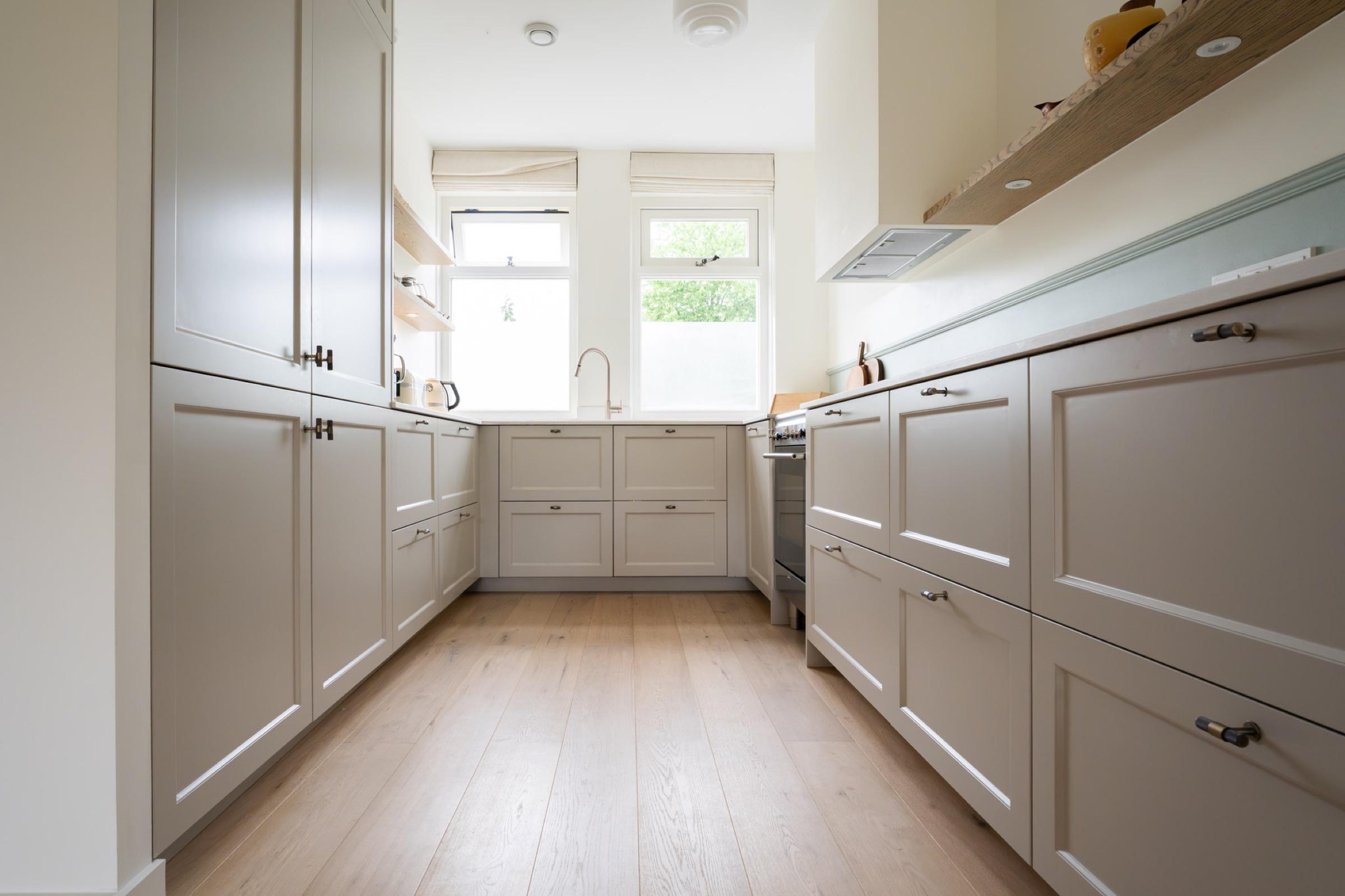
Two flats on the same Amsterdam street, same building year, near enough the same footprint, sold nine months apart with a difference well into six figures. The kitchens were comparable. What separated them was that one had a loft reached by a fixed staircase, with proper headroom and daylight, so twelve square metres counted as living area in the appraisal, and it carried a label B instead of an F. Valuers measure and count; they do not fall in love with a splashback.
That is the subject in one paragraph, but it is worth unpacking, because it decides where a renovation budget should go if value matters as well as comfort.
Three different numbers, and only one of them is your value
People mix up three numbers. The WOZ is a municipal figure for tax, calculated from models and always lagging the market. The market price is what a buyer will pay on the day. The taxatiewaarde in a validated appraisal is what a lender will accept, and it decides whether your buyer can finance the purchase at all. A renovation lands differently in each, and the appraisal is the strict one: it follows the national measurement instruction based on NEN 2580, which counts usable floor area, not ambition.
The detail that catches people out is how attic space is treated. Floor area with less than 1.5 metres of headroom does not count. A room reached only by a loft ladder is recorded as other internal space, not living area, however nicely it is finished. Put in a fixed staircase, get the headroom and daylight right, and the same square metres move into the column that drives the valuation. It is the cheapest reclassification available in most Dutch houses.
Square metres beat finishes, almost every time
The reliable way to add value in Amsterdam is to add counted area: a rear extension, a dormer, a converted attic. Indicative 2026 costs including VAT and finishing run around 2,500 to 4,000 euros per square metre for a rear extension, 12,000 to 25,000 for a standard rear dakkapel, and 15,000 to 40,000 for an attic conversion with a fixed stair, insulation, glazing and heating. The uplift is roughly the local price per square metre of counted area applied to what you added, which is where the eye-catching figures of a hundred thousand euros and more come from. They are floor-area numbers, not finishes numbers, and they hold only when the new area genuinely counts and the paperwork is in order.
There are trade-offs worth naming. A deep extension eats garden and darkens the rear of the original house, and Amsterdam buyers do value outdoor space. Every street also has a ceiling: push 200,000 euros into a house already at the top of its own street and you have bought comfort, which is a perfectly good reason to do it, but you have not bought value. Ask a local makelaar for sold prices per square metre in your postcode before you set the budget, not after. If the attic is where your extra space is hiding, our loft and attic conversion work starts with exactly that measurement question.
Kitchens and bathrooms: necessary, rarely profitable
These rooms do not multiply value; they remove objections. A dated but functional kitchen costs you negotiating room equal to what the buyer imagines a replacement costs, which is usually more than it really costs. Typical recovery on a mid-market home is 50 to 80 percent of what you spend, so the rule is simple: with five or more years ahead, spend on what you will use daily; selling within a year, do the minimum that removes the objection and keep it neutral and durable. The exception is a second bathroom or a second toilet in a family home, which changes the pool of buyers rather than their impression. Our realistic week-by-week bathroom timeline is worth reading before you plan around a date.
The energy label has become a financial instrument
The label is on the listing, buyers price it, and lenders take it into account: extra borrowing capacity exists for energy measures financed through the mortgage and for well-labelled homes, with the amounts reset annually, so check the current figures rather than an old article. A package moving a terraced house from F to C or B, typically floor, roof, cavity and HR++ glazing, is indicatively 15,000 to 35,000 euros, often part-covered by ISDE and a Warmtefonds loan. It is the one category that pays you while you still live there, in lower bills and in walls that stay above dew point rather than growing mould, which is the argument in our piece on why cold walls cost more than a low thermostat.
Two dates belong in the calculation. Net metering for solar ends on 1 January 2027, which does not kill the economics of panels but shifts them towards self-consumption, so a heat pump, a battery or simply running the washing machine at midday changes the payback. And the private rented sector is heading for a minimum label D by 2029, so for a landlord this is not an optimisation, it is the price of continuing to let.
Permits and the VvE decide whether the area counts at all
Some rear extensions and dormers can be built without a permit under the national rules for the achtererfgebied, but the exemptions fall away on a monument, in a protected streetscape, and wherever the local omgevingsplan says otherwise, which in central Amsterdam is often. In an apartment there is a second gate: the envelope and the roof are communal, so the VvE must consent, and converting shared attic space into your own usually means amending the splitsingsakte at the notary. None of this is a formality to sort out afterwards. An appraiser can decline to count a converted attic without documentation showing it was done lawfully, and work carried out without permission is a discount at sale, not a feature. Our decision framework for permits, monuments and VvE approval sets out which route an address falls into.
The façade does not add area, but it removes doubt
Repointing, sound window frames and fresh exterior paint add no measured area, and they still matter: they keep water out and they stop the viewer's instinctive question of what else has been neglected. Indicative costs are 2,500 to 6,000 euros to repaint the exterior woodwork of a terraced house, and 80 to 150 euros per square metre for repointing. On a canal house, restoring frames, shutters and profiles correctly is as much a permit question as an aesthetic one.
Cost against value, honestly
- Extensions and dormers: usually the strongest return, often 60 to 100 percent of cost recovered, more where the local price per square metre is high.
- Attic conversion: the fixed staircase and the headroom are what make the area count, and the counting is what makes the value.
- Kitchens and bathrooms: typically 50 to 80 percent recovered. Do them for living in, not for flipping.
- Insulation, glazing and heating: 75 to 100 percent, plus the savings and the label. The only category that pays while you own it.
- Wellness rooms, cinema rooms and exotic stone: enjoy them, but leave them out of the valuation.
- Budget: a full interior renovation in Amsterdam is indicatively 1,200 to 1,800 euros per square metre in 2026, and old buildings need a 10 to 15 percent contingency you genuinely expect to spend.
Three questions before committing the budget
How long are you staying? Under two years, spend on objections and presentation; over five, spend on how you actually live. Does the work add counted area, or only finish? Both are legitimate, but only one reliably moves an appraisal. And where is the ceiling of your street? That number decides how much of your spend has anywhere to go.
The sequence matters as much as the list. Deal with damp, structure and insulation first, then layout and services, then the finishes everyone photographs, because the alternative is lifting a new floor to chase an old leak. An uplift of a hundred thousand euros or more is real, but it is almost always about added area, a better label and clean paperwork rather than taps. To find out which of those your property has available, send us the address and what you are considering and we will give you a straight assessment of what is worth doing.