
Flooring Wood vs PVC: What truly suits Amsterdam living?
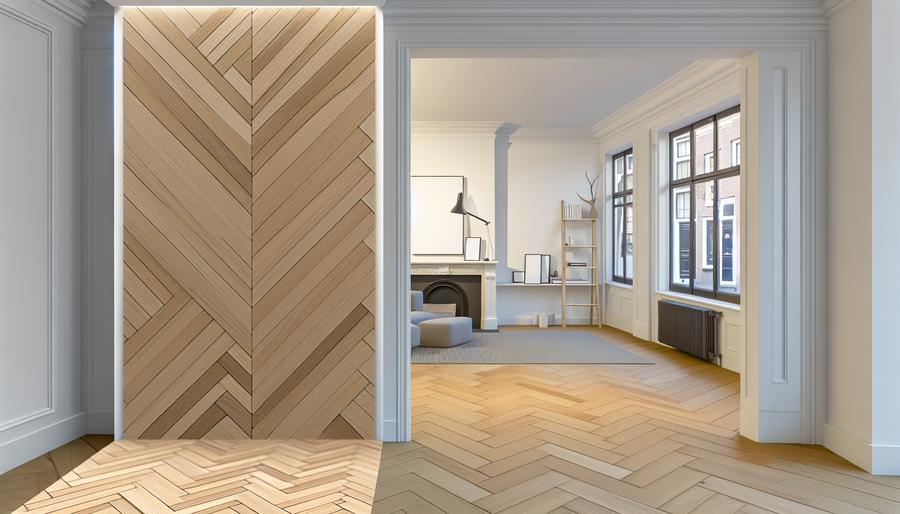
If you live in Amsterdam or elsewhere in Noord-Holland, choosing between wood and PVC (LVT/SPC) flooring isn’t just about looks. It’s about acoustics in a VvE building, narrow staircases, slightly uneven subfloors in older grachtenpanden, and how your floor behaves with underfloor heating. Here’s a calm, practical comparison to help you decide what fits your home and habits.
Look, feel, and the everyday experience
Wood brings natural depth—grain, knots, a gentle patina that evolves with time. Engineered oak in herringbone or wide plank is the Amsterdam classic: warm underfoot, tactile, and visually forgiving. If you love a lived-in character, wood ages gracefully and can be refinished.
PVC (luxury vinyl) has made huge strides. Good lines offer highly realistic textures and micro-bevels; in bright Dutch morning light it can look convincingly like oak or even terrazzo. It’s consistent, easy to clean, and excels in households with kids, pets, or sandy shoes returning from the coast.
Logistics tip: In canal houses with tight, twisting staircases, long solid planks are a challenge. PVC planks or engineered wood in shorter lengths are easier to get upstairs; for extra-long oak planks you may need to hoist through a window, which can require coordination with the gemeente and sometimes a permit, plus protection for the gevel.
Acoustics and VvE realities
In Amsterdam apartments, your floor choice is as much about your neighbours as your taste. Many VvEs require a documented 10 dB impact-sound reduction—often specified as ΔLw 10 dB—verified by a test certificate for the full floor system (finish + underlay/subfloor). Always ask your VvE for the exact rule and acceptable certificates before ordering.
Wood can meet VvE requirements with a floating system over a high-quality acoustic underlay. Gluing wood directly to the subfloor offers a solid feel but can transmit more impact sound; you may need a resilient layer beneath. Expect professional advice and a mock-up/spec sheet to keep the VvE happy.
PVC is naturally quiet underfoot. Click PVC with an integrated acoustic backing or a certified underlay is often the easiest way to achieve the 10 dB rule. Glue-down PVC gives a slick, low profile, but you still need an acoustic layer below if your VvE requires it.
Subfloors, movement, and underfloor heating
Older Amsterdam homes can have characterful subfloors—slightly uneven, sloping, or with historical repairs. On timber joists over pile foundations, seasonal movement is normal.
Engineered wood (not solid) is the safe default here. It’s dimensionally more stable and can be installed as a floating system to accommodate small movements. Localised levelling or a thin self-levelling compound can correct dips without adding too much weight—important for older structures.
PVC is very tolerant of unevenness once the subfloor is properly skimmed. It doesn’t mind a ground-floor space that runs a little cooler or more humid near a kruipruimte, and it pairs extremely well with low-temperature underfloor heating thanks to its high thermal conductivity.
Height and heritage: In Monumentenzorg-listed homes, you may not be allowed to remove original pine boards or raise thresholds. A thin build-up is crucial. Glue-down PVC is exceptionally low profile; an engineered wood in 10–12 mm can also work with careful detailing at doors. Always check constraints with your municipality and, if applicable, your monument adviser.
Durability, maintenance, and rooms that get wet
Wood wears beautifully but needs care. Expect to refresh the oil or lacquer every few years in high-traffic zones. The advantage is reparability: scratches can often be spot-repaired, and you can sand and refinish later to reset the clock. Wood dislikes standing water; for bathrooms and some kitchens, detailing and discipline are key.
PVC is hard-wearing and forgiving: great for kitchens, hallways, utility rooms, and ground floors with wet coats and muddy boots. It’s water-resistant and easy to mop. Deep gouges are harder to disguise than on wood, but individual planks can usually be replaced if you have spares from the same batch.
Sustainability, emissions, and circular choices
Sustainability isn’t a simple scoreboard. Consider the whole system.
Wood: Choose FSC or PEFC-certified engineered oak with a durable top layer. Low-VOC oils and lacquers keep indoor air pleasant; ask for emission data (e.g., E1 formaldehyde class). A long-lived, repairable wood floor can span decades, which is often the greenest outcome.
PVC: Look for phthalate-free formulations, verified low VOC emissions, and manufacturers with take-back programs. Some Dutch suppliers carry DUBOkeur or publish independent environmental profiles. Pair PVC with an underlay made from recycled felt or rubber to improve both acoustics and circularity.
Costs, timelines, and Amsterdam logistics
As a guide for the region (materials + pro installation, VAT incl.):
Engineered wood: roughly €90–€160 per m² for quality oak; patterned installs (herringbone/chevron), stair nosings, and site finishing lift costs and time.
PVC: roughly €55–€100 per m² for quality glue-down or click systems; premium patterns and extensive subfloor prep add to totals.
Wood typically takes longer—acclimatisation, careful install, and finishing—while PVC is faster once the subfloor is flat. In tight stairwells, delivery slots, temporary traffic management for hoisting, and protecting communal areas must be planned. Check if your straat requires a short-term hoist/lift arrangement; your VvE or building manager often has a protocol for coverings, lift bookings, and working hours to comply with Amsterdam noise rules.
Common mistakes to avoid (quick checklist)
- Skipping the VvE step. Get the 10 dB impact-sound rule and acceptable lab certificates in writing before you buy.
- Underestimating subfloor prep. A flawless PVC install needs a smooth base; engineered wood needs level support to avoid bounce or creaks.
- Choosing solid wood in a moving structure. Engineered constructions handle Amsterdam’s seasonal shifts better.
- Overbuilding the floor height. Mind door clearances, threshold lines, and any Monumentenzorg constraints.
- Ignoring underfloor heating details. Check max surface temps (usually ~27°C) and choose floors with good thermal resistance values.
- Buying on looks alone. Ask for full-system acoustic and emissions data, not just a plank sample.
- Skipping spares. Keep 1–2 extra boxes for future repairs, especially with PVC.
So—wood or PVC for your Noord-Holland home?
If you want warmth, reparability, and a floor that gains character, go engineered wood with a compliant acoustic build-up. If you prioritise speed, water resistance, thin build-up, and easy care—especially in apartments—PVC is tough to beat. Many Amsterdam renovations mix both: wood in living spaces, PVC in kitchens and utility zones, keeping transitions neat and acoustic standards intact.
Still undecided? Bring us a floor plan, your VvE rules, and a photo of the subfloor. A short site visit in Amsterdam or the region usually reveals the right answer quickly—and prevents costly surprises later.