
Permits and Monuments in Amsterdam: A Homeowner’s Decision Framework
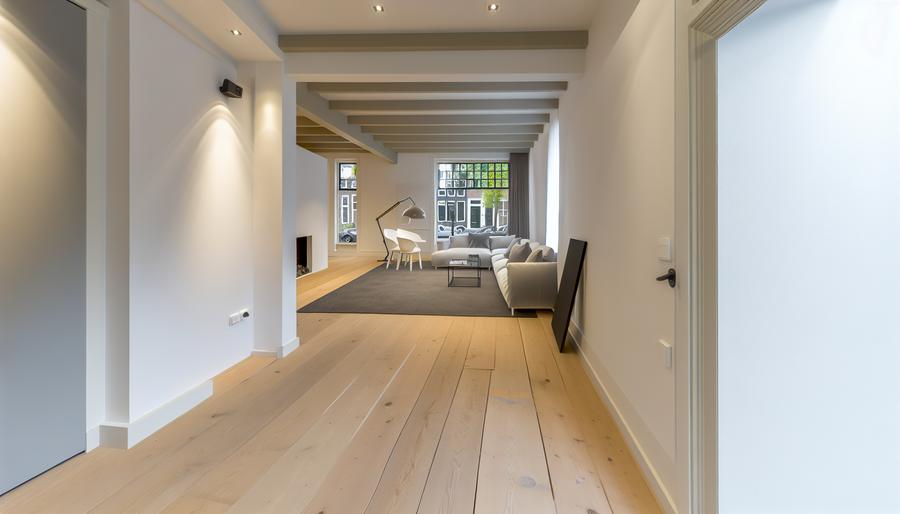
Renovating a historic home in Amsterdam or Noord-Holland is equal parts privilege and puzzle. “Permits and Monuments” isn’t just paperwork—it’s the backbone of every decision you’ll make, from the window profiles you choose to where the heat pump can sit. Below is a practical framework we use with clients to keep heritage value intact while delivering a comfortable, efficient home—without the last-minute scrambles.
Start here: identify your status and your constraints
Before sketching anything, confirm the formal status of your property:
- Rijksmonument: Nationally listed. Alterations require an omgevingsvergunning for the monument activity; reviews are rigorous but navigable.
- Gemeentelijk monument: Municipally listed. Similar principles, with local heritage guidance.
- Beschermd stads- of dorpsgezicht: Protected cityscape. External changes (dormers, solar, windows) face stricter design rules even if your home isn’t a designated monument.
Check via the municipality and the national register, then work in the Omgevingsloket. In Amsterdam, the Monumenten en Archeologie team and the Commissie Ruimtelijke Kwaliteit (welstand) advise on applications. Expect more attention on street-facing elevations and any element cited as “waardevol” in past surveys.
Decision sequence: from scope to permit path
Think in two tracks: what the house needs, and what the monument allows. Walk through these decisions in order:
- Define scope: Maintenance-in-kind (usually permit-light), restoration (matching original), or alteration (new materials, layouts, or MEP upgrades).
- Pre-application consult: A short advisory with Monumentenzorg can save weeks. Bring photos, measured drawings, and a clear intent.
- Choose the permit route: Simple works may be regular procedure (around 8–14 weeks). Monument-heavy changes can shift to the extended route (up to ~26 weeks). Build this into your planning.
- Coordinate with your VvE: For apartments, VvE approval often precedes permit submission—especially for facades, roofs, risers, or new penetrations.
- Document smartly: Heritage-oriented drawings (1:20 details of windows, profiles, and trims), a brief bouwhistorisch memo, and material samples reduce “clarification” rounds.
What typically flies (and what triggers red flags)
Every building is unique, but patterns emerge:
- Windows and doors: Reinstating original profiles and sightlines scores well. Slim double or vacuum glazing is often accepted where HR++ won’t fit without altering profiles. Avoid chunky frames and reflective coatings at the front facade.
- Insulation: Interior wall insulation using vapor-smart, capillary-active systems (e.g., calcium silicate, wood fibre) protects old masonry. External insulation on street facades is usually a non-starter; rear or side elevations may be negotiable.
- MEP upgrades: Heat pumps, MVHR, and solar require nuance. External units in view of the street are often refused; inner courts, roof wells, or attic spaces with acoustic screening fare better. Solar is likelier on rear slopes, integrated flush with dark frames. Budget for an acoustic plan—national noise limits at the property boundary apply, and Amsterdam can be stricter in tight courtyards.
- Interior reconfiguration: Retaining key staircases, beams, and ornamented ceilings helps. New openings in load-bearing walls demand structural justification and, in canal houses, sensitivity to wooden pile foundations and historic beams.
Amsterdam realities: logistics, neighbors, and foundations
Many Amsterdam projects fail on logistics, not design. Narrow staircases and gevels mean large elements can’t turn a corner. Decide early if windows must be temporarily removed, or if a hoist/kranen is required. Street use in the Binnenstad (for cranes, containers, or scaffolding) needs separate approvals and time slots—plan around market days, events, and peak traffic.
Canal houses often sit on houten paalfunderingen. Vibration from demolition or heavy machinery risks damage. Commission a funderingsonderzoek if there’s any doubt (cracks, sloping floors, low groundwater history). For extensions, screw piles or lightweight structures reduce impact. If you touch the ground (courtyard slab, below-grade works), the municipality may request archaeological consideration.
Comfort and sustainability within monument rules
Rijksmonumenten are generally exempt from the energy label requirement, but that doesn’t stop you from improving comfort and reducing bills. The ISDE subsidy can support insulation and heat pumps if solutions are heritage-compatible. In practice, that means:
- Prioritising airtightness and controllable ventilation over bulk insulation on character facades.
- Using vacuum glazing or secondary glazing at the street side; thicker units at the rear.
- Placing MVHR units in attics with discreet roof penetrations; use existing chimney routes where possible.
- Specifying low-temperature heating (e.g., floor heating in new build-ups or slim-wall radiators) to pair with heat pumps—check floor build-up heights over historic beams.
Confirm eligibility windows on the ISDE page and, if in Amsterdam, look for complementary municipal schemes that occasionally reopen for monuments.
Timeline, neighbours, and work hours
Set expectations with your VvE and direct neighbours early—sound travels in 17th-century timber frames. The city enforces limits on construction noise and working hours; districts may vary, but evening and Sunday work is typically off-limits. Include quiet windows for school exams or neighborhood events if you’re in the centre.
Realistic planning: 2–4 weeks for pre-consult and survey work, 8–14 weeks for a straightforward permit, and up to 26 weeks for complex monument cases or committee cycles. Order long-lead items (custom windows, acoustic screens) only after receiving final approval.
Permit-ready checklist (use before you press submit)
- Status proof: Monument designation confirmation and any prior heritage reports.
- Measured drawings: Plans/sections/elevations plus 1:20 facade/window details.
- Bouwhistorisch note: What is valuable, what you’ll retain, and why.
- Structural package: Calculations, beam checks, and foundation notes for pile sensitivity.
- Moisture/ventilation strategy: Especially for interior insulation.
- Logistics plan: Access via stair/hoist, scaffolding layout, and street-use permits.
- VvE approvals: Minutes or signed consent for common elements.
- Asbestos survey: If the building predates 1994 and any demolition is planned.
Common (avoidable) mistakes
- Designing to preference, then asking permission: In monuments, reverse it—design to policy first, then refine.
- Ordering windows before approval: Custom profiles often need tweaks after committee advice.
- Forgetting the rear facade: Rear and inner-court views are reviewed too, especially for neighbors’ amenity and noise.
- Underestimating logistics: A perfect kitchen island won’t make it up a 70 cm stair. Plan craning windows and protective routes.
- Ignoring drainage and moisture: Airtightness without planned ventilation invites mould in thick masonry.
- Skipping a pre-consult: One 30-minute session with Monumentenzorg can remove weeks of back-and-forth.
Handled well, permits become a creative brief rather than a brake. Respect what makes your building special, choose reversible upgrades, and let the process guide the details. That’s how you end up with a home that feels quietly modern, works in winter, and still looks right at dusk on your Amsterdam street.