
Home Office Spaces: Smart Space Planning for Amsterdam Homes
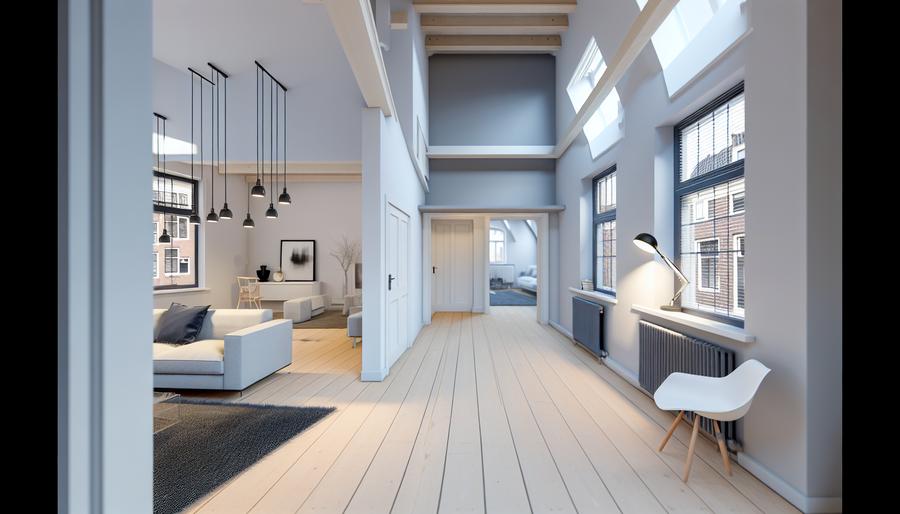
Working from home in Amsterdam often means carving a calm, focused corner out of a compact plan. Add our city’s quirks—narrow staircases, monument ceilings, VvE rules—and a good home office isn’t just a desk; it’s smart space planning. Here’s how we design moody, evening-ready workspaces that feel intentional, not improvised.
Choose the right spot (and respect the building)
Start with orientation and noise. A room facing an inner courtyard is usually quieter than street-side, especially in older grachtenpanden where tram and bike bells carry. If you’re in a top-floor apartment, watch solar gain under the roof; an attic office can be great in winter but needs shading and ventilation in summer.
In an apartment with an active VvE, any visible changes (new exterior unit for a heat pump/AC, drilling through the façade for cabling, or altering window frames) typically need approval. Inside-only works are simpler, but check house rules about noise hours for drilling. In Rijks- or gemeentelijk monumenten, expect Monumentenzorg constraints: avoid chasing cables into original brick or cutting historic beams. Use surface-mounted conduits or skirting trunking that reads intentional—powder-coated steel or painted wood to match limewashed walls.
Layout that balances focus, flow, and compact footprints
In tight Noord-Holland plans, every centimetre matters. Aim for a clear, 90 cm walkway behind the chair so you’re not wedged between desk and cabinet. Place the desk perpendicular to the window to reduce screen glare and to keep that moody evening ambience controllable with shades. If the room is long and narrow, float a desk at mid-room with a shallow credenza behind it; the credenza doubles as a printer station and cable hide-out.
Go vertical for storage. Tall, shallow shelving (28–32 cm deep) in matte black steel or oak reduces bulk. Use closed storage at eye level to keep the scene visually calm; stash cables, hard drives, and the inevitable stationery chaos behind doors. For dual-purpose rooms, a wall bed or sliding panel can hide the office at night—helpful if you’re working in a guest room or living space.
Logistics count in Amsterdam. If you can’t pivot a full desk up a 17th-century stair, choose modular pieces or flat-pack elements you can assemble in-situ. For canal houses, plan delivery via a verhuislift through the front window; schedule it with neighbours and the municipality if needed. Protect herringbone floors with felt sliders and a low-profile wool rug under the chair to tame rolling noise on timber joists.
Lighting for moody evenings (without eye strain)
Evening work is where a lot of home offices fail. You want a soft, cocooned atmosphere that still delivers precise task light. Think in layers:
- Ambient: Dimmable indirect light at 2700–3000K. LED coves washing the ceiling or wall-grazers behind shelving create depth without glare.
- Task: A desk lamp with CRI 90+ at ~3000K, focused on the work plane. Aim for around 500 lux on the desk surface; you don’t need to quote standards at home, but the brightness target helps eyes stay fresh.
- Accent: A small wall washer on artwork or a shelf glow makes the room feel intentional when you’re on camera—even at night.
Use glare control: matte screens, lamp shades with cut-off angles, and warm-dim drivers that soften colour temperature as you lower intensity. If you’re in a monumental room with high sash windows, add lined curtains or wooden blinds to control reflections and preserve that moody, evening privacy without blocking ventilation.
Acoustics and privacy on timber joists
Most Amsterdam townhouses sit on timber joists, so sound travels. Start soft: a dense wool rug, felt underlay, fabric curtains, and upholstered pinboards can drop reverberation times dramatically. Consider slim acoustic panels (30–50 mm) behind your chair or on the ceiling above the desk—easy to mount and reversible if you rent.
Doors are typical weak points. Add brush seals and a drop seal to the threshold to stop hallway noise. If you share walls, float your bookcase 10–20 mm off the wall with neoprene pads; that decoupling improves transmission loss without major works. Keep mechanical keyboards and small fans in check if your VvE has strict quiet hours—neighbors appreciate it, and so will your recordings.
Power, data, and climate—planned, not patched
Run more outlets than you think: two double sockets at desk height plus a floor-level set for printers/chargers keeps cables off show. In monuments, surface-run flat Ethernet cable along skirting rather than Wi‑Fi only if you take frequent calls; it’s more stable. Use a cable trough under the desktop and a single cloth-braided drop to the floor for a tidy silhouette.
Ventilation matters when you’re on back-to-back calls. A quiet trickle vent or continuous mechanical ventilation (with boost) keeps CO₂ levels steady; add a discreet CO₂ monitor to nudge window habits. For thermal comfort in top-floor offices, external shading or light-reflective blinds beat blasting AC. If you’re improving insulation or adding a (hybrid) heat pump as part of a broader renovation, check the Dutch ISDE subsidy for homeowners; details change, but it’s often relevant for insulation measures and heat pumps. See the RVO page: ISDE subsidy (RVO). For apartments, external units typically need VvE approval and may have façade noise/visibility limits; consider indoor units paired with existing ventilation or a water-side connection if available in your building.
When fixing anything into old masonry or ceiling beams, use short mechanical anchors and avoid over-drilling. On pile-founded houses, heavy vibration can be risky; hand-drill where possible and pre-map any known services to avoid accidental hits.
A simple planning sequence
Good space planning is a sequence of small, confident decisions. Use this checklist to move fast without rework:
- 1. Define the job: Calls and focus work or design/dual-monitor setup? Your tasks set desk size, storage type, and lighting levels.
- 2. Pick the room by noise and heat: Courtyard over street; avoid attic without shading/ventilation plan.
- 3. Map approvals/logistics: Any VvE or Monumentenzorg implications? Can furniture fit up the stair, or do you need a verhuislift?
- 4. Fix the layout: Desk perpendicular to window, 90 cm clearance, vertical storage, cable path decided.
- 5. Layer the light: Ambient dimmable 2700–3000K, task CRI 90+ at 500 lux, one accent. Place dimmers where you enter.
- 6. Quiet it down: Rug + curtains + one acoustic panel, door seals, silent ventilation.
- 7. Power and data: Extra sockets at desk height, a tidy cable trough, Ethernet if calls are critical.
Done well, a home office shouldn’t fight your home’s character. In Amsterdam and across Noord-Holland, we’ve learned to let the architecture lead: keep materials honest (limewashed walls, oak floors, matte black steel), hide the tech, and control light. By evening, you’ll have a space that reads calm on camera and calmer in person—quiet, dim, and ready for real work.