
Indoor–Outdoor Connection: Amsterdam Renovation Ideas for Moody Evenings
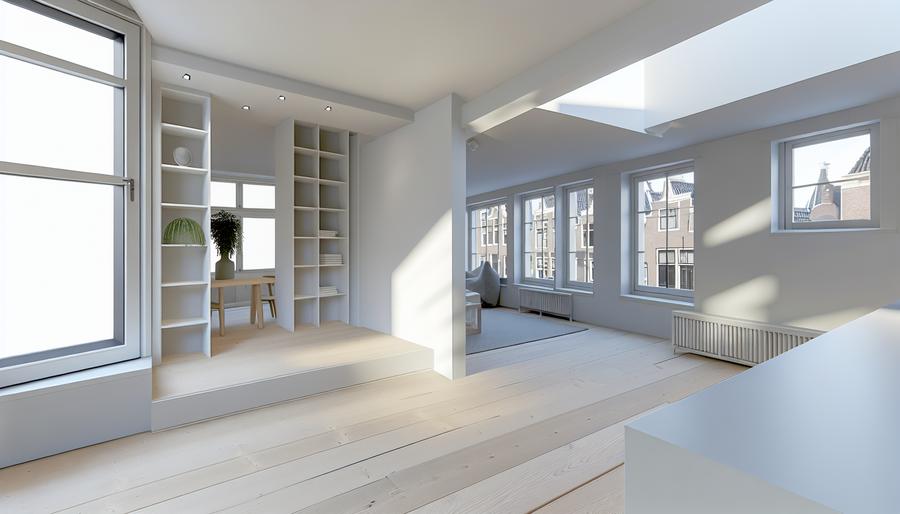
When Amsterdam nights settle in and the city glows in amber, the best homes blur the line between inside and out. The goal isn’t only summer doors-wide-open living; it’s a year-round, moody evening connection where a garden, balcony, or roof terrace quietly supports how you cook, relax, and host. Here’s how we design that connection for real Amsterdam and Noord-Holland homes—respecting heritage, VvE rules, and our climate—so it looks effortless and works every day.
Start with the floor plan: where can outside be part of life?
Take a critical look at the rooms that could benefit most from a stronger outdoor link. In a typical ground-floor canal or 19th-century apartment with an achtertuin, the kitchen-dining zone usually wants the garden. In a souterrain, it might be the living room needing daylight and a step to a courtyard. For upper floors, the balcony or potential roof terrace should connect to the space you use in the evening—often the living area.
Map circulation: Can you move from hob to herb planter without crossing a narrow hallway? Can guests drift from sofa to a sheltered balcony niche? If the current layout fights the outdoor space, consider flipping living and dining zones, or carving a compact garden-side pantry to free the façade for doors.
Openings that respect structure and heritage
Big glass doors are the cliché, but Amsterdam buildings bring nuance. Many canal houses and 19th-century blocks sit on pile foundations with load-bearing brick walls. Before planning a wide opening, have a structural engineer assess wall thickness, lintel capacity, and settlement history. A steel portal frame may be required; factor its depth into your interior finishes to keep sightlines clean.
If your façade is protected or you’re in a Rijksmonument or gemeentelijk monument zone, Monumentenzorg may limit changes to openings, profiles, and muntin patterns. In those cases, we’ve found slim thermally broken steel doors (with historically sympathetic divisions) are often acceptable, whereas frameless sliders are not. Where enlarging an opening is impossible, consider a shallow glazed loggia or winter garden inside the original line—an insulated buffer zone that delivers an “outdoor” feel without altering the external façade.
Upper floors without garden access benefit from deep window seats, folding windows, or inward-opening French doors with a Juliet balustrade. It won’t replace a terrace, but it dramatically improves ventilation, evening views, and the feeling of connection.
Seamless materials and thresholds
Continuity is what makes indoor–outdoor living feel calm at dusk. Match tones, not necessarily identical materials. If you have oak herringbone inside, pair it with a porcelain tile outside in a similar hue and plank size. Choose frost-proof, slip-resistant tiles with rectified edges for tight joints. For timber decks, go for thermally modified ash or Accoya with hidden fixings; they withstand Dutch winters and look elegant under low light.
A flush threshold is essential. We detail a recessed track with a sloped sub-sill, integrated threshold drain, and robust waterproofing upturns. This gives you seamless movement for strollers or serving trays while keeping water out during a storm. Add a narrow external mat well to trap grit before it meets your interior floor.
For a moody evening palette, lean into matte finishes—limewashed walls, dark bronze or blackened steel frames, and honed basalt or soapstone counters near the garden doors. These materials absorb light softly, avoiding glare and reflections at night.
Moody evening lighting that actually works
Low, warm, and layered is the mantra. Inside, run a dimmable 2200–2700K scene that puts pools of light where you sit and cook—under-cabinet strips, a soft-glow pendant over the table, and a couple of wall washers to graze limewash texture. Outside, choose IP65 warm markers: recessed step lights, a slim up/down wall fixture at the façade, and a spike uplight for a feature tree or fern. Keep the garden darker than the interior; it reads as depth, not a black mirror.
Control matters. Group exterior lights into at least two circuits—path/functional and ambient/planting—on smart dimmers or a simple two-gang controller. Add a motion sensor for the side gate or a bin route to keep nighttime practical. Avoid blue-white light; it looks harsh against brick and can bother neighbors.
Climate, acoustics, and energy
Amsterdam evenings can be breezy and damp. Choose thermally broken frames with quality gaskets, plus acoustic glazing if you’re on a tram route. Trickle vents or a small, quiet mechanical ventilation unit maintain air quality without leaving doors ajar. A frameless internal curtain or sheer can trim drafts near seating while preserving views.
Energy performance is improved by reducing thermal bridges at your new opening. Use insulated thresholds, warm-edge spacers in glazing, and underfloor heating inside to combat cold downdrafts. If you’re upgrading heating, look into the ISDE subsidy for (hybrid) heat pumps; the improved envelope around your garden façade will help a low-temperature system perform well. On upper levels, a green roof or pergola with deciduous planting provides summer shade, easing cooling loads without heavy blinds.
Permits, neighbors, and Amsterdam logistics
Any alteration to structural walls or external appearance may require an omgevingsvergunning. Heritage-listed buildings involve Monumentenzorg review; expect longer timelines and more detailed drawings. For balconies, roof terraces, or anything touching shared components, secure VvE approval early. The VvE may dictate materials, drainage, and acoustic underlays to avoid noise transmission to neighbors.
Plan for the realities of our city. Narrow staircases complicate door deliveries—consider modular steel frames assembled on site or a crane day via the façade window if permitted. In tight streets or along the canal, schedule material drops early in the day and respect municipal noise regulations for demolition and cutting. If your garden is only accessible through the house, protect floors and plan a clean route; sometimes a small garden gate modification (approved by VvE) saves weeks of headaches.
Quick decision checklist
- Function first: Which room benefits most from an outdoor link during evening hours? Redraw the plan to favor that space.
- Structure and heritage: Can the wall safely open, and will Monumentenzorg allow the change? Budget for steel and detailed profiles.
- Threshold and drainage: Commit to a flush sill with a linear drain and robust waterproofing; confirm frost-proof exterior finishes.
- Lighting layers: Specify two exterior circuits and dimmable 2200–2700K fixtures; avoid glare and neighbor light spill.
- Thermal and acoustic comfort: Thermally broken frames, acoustic glass, and underfloor heating near the façade.
- Permissions and VvE: Lock in omgevingsvergunning requirements and VvE approvals before ordering doors or booking a crane.
- Access and phasing: Solve delivery routes and protection plans; phase messy works before final finishes.
With the right opening, considered materials, and evening-minded lighting, you can feel close to your garden, balcony, or roof terrace even in February. In Amsterdam, it’s the thoughtful detailing—heritage-aware frames, a clean threshold, a quiet dimmer—that turns the indoor–outdoor idea into daily life.