
Space Planning for Home Office Spaces in Amsterdam Homes
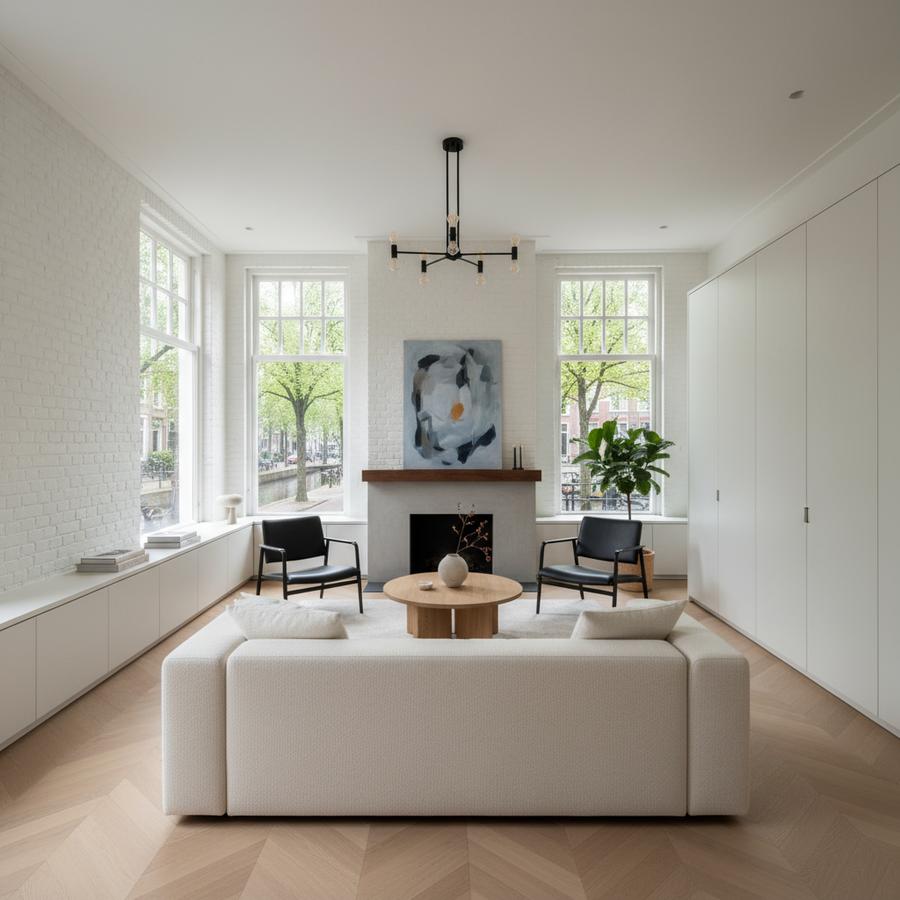
Home office spaces succeed when the plan is clear and the atmosphere is calm. In Amsterdam and across Noord-Holland, many of us work within compact rooms, quirky floorplates, and the bright but variable Dutch daylight. With a fresh, morning-light mood in mind, here is how to plan a home workspace that feels crisp, organized, and genuinely productive—without taking over the rest of your house.
Start with light and sightlines
Place the primary desk where your eyes naturally want to rest. In canal houses and 1930s apartments, windows are tall and generous. Position the monitor perpendicular to the window to avoid glare, and keep a clear view out for micro-breaks. North- or east-facing windows deliver that crisp morning light most of the day; south-facing windows may need a sheer roller or linen curtain to soften contrast.
Layer lighting so the space stays consistent through short winter days. Combine a diffuse ceiling fixture, a focused desk task light at about 35–45 cm above the surface, and a soft wall wash to reduce eye strain. Choose 4000K LEDs for a bright, neutral tone, and keep dimmers so you can tune for video calls. If you share the room, put task lighting on separate switches to avoid lighting the whole space for one person.
Zone the room: focus, storage, and soft buffer
Even in a single room, create three micro-zones. The focus zone is your desk and immediate reach—keyboard, monitor arms, charging. The storage zone holds archives, printers, and supplies; keep it behind you or to one side to reduce visual noise on camera. The soft buffer is an armchair or slim bench with a side table for reading or calls; it gives your brain a place to regroup without leaving the room.
Amsterdam’s narrow staircases and tight turns argue for modular, flat-packable furniture and built-ins assembled in place. A wall-to-wall shelf at 30 cm depth can carry books without crowding circulation. Consider a shallow credenza at 40 cm depth for printers and routers; front a portion with acoustic slats to mask fan noise. For small bedrooms doing double duty, a fold-down desk with integrated cable troughs preserves floor area and can pass easily through a stairwell.
Amsterdam realities: VvE, heritage, and logistics
Before you attach anything to the facade—exterior sun shades, satellite internet, even discreet signage for a home practice—check your VvE rules. Many associations restrict drilling in common walls, floor finishes that transmit impact noise, and visible exterior changes. If you live in a protected monument, Monumentenzorg approvals apply to window treatments, interior partitions, and even visible cable runs. Work with concealed cable channels and reversible fixings; they keep inspectors and future buyers happy.
Logistics matter. Heavy desks and filing cabinets are not friends with a 60 cm-wide spiral staircase. Plan delivery via a moving lift through the window where possible, and size furniture accordingly. Inside, older timber floors on piles can bounce; distribute loads with wider cabinet plinths and avoid point loads from dense shelving stacked in one corner. If you are fixing anything heavy to walls, verify you are in solid masonry rather than a thin partition, and avoid cutting into historic beams. A quick consultation with a local contractor can save you from noisy surprises and costly repairs.
Acoustics and privacy in shared buildings
For video calls and deep work, treat the room like a miniature studio. Soft, dense textiles do the heavy lifting: a wool rug, full-height curtains, and an upholstered chair will tame flutter without making the room dull. Consider a pinboard or cork wall behind the monitor; it doubles as a to-do zone and a sound absorber. On the door, a simple drop seal and brush strips reduce corridor noise noticeably.
In older Amsterdam apartments, impact noise to downstairs neighbors is a sensitive topic. If your VvE allows hard floors, add an underlay rated for impact sound reduction and keep chair casters soft. Printers and NAS drives should sit on vibration pads inside a cabinet. For late-night work, move the soft buffer to the party-wall side to keep the loudest activity away from neighbors.
Power, data, and comfort that lasts
A clean plan eliminates cable spaghetti. Run a single floor or wall conduit to a small hub under the desk: power strip with surge protection, Ethernet if available, and USB-C charging. Route monitor and laptop cables through a desk grommet; label both ends. In prewar homes, sockets may be scarce; have a licensed electrician add a dedicated circuit if you run multiple monitors, a desktop tower, and supplemental heating.
Comfort is more than a good chair. Maintain fresh air with a trickle vent or a quiet mechanical unit; a CO2 sensor helps you time short, effective airing. Choose an adjustable desk (sit-stand if possible) set roughly at elbow height with wrists straight. To reduce energy use and improve your energy label, consider sealing window drafts and upgrading insulation. Some measures may be eligible for the Dutch ISDE scheme; check details on the RVO website at rvo.nl/subsidies-financiering/isde.
The space-planning checklist
- Define zones: focus (desk), storage (behind/side), soft buffer (chair/bench).
- Map light: desk perpendicular to window, add 4000K task and ambient layers.
- Measure routes: confirm stair widths and window access for delivery or a moving lift.
- Fixings plan: check VvE/Monumentenzorg rules; choose reversible cable channels.
- Acoustics: rug, curtains, door seal, and one absorptive wall within the camera frame.
- Power/data: one hub with surge protection, labeled cables, and a spare outlet for guests.
- Ergonomics: seat height with feet flat, top of monitor at or just below eye level, 50–70 cm viewing distance.
Material palette for a bright morning mood
Keep materials light and tactile to reinforce clarity. Limewashed walls diffuse sunlight without glare. An oak herringbone or straight-plank floor brings warmth; pair with matte black steel legs and a natural stone desktop for durability. Choose a wool rug in a soft, heathered tone to calm acoustics, and linen curtains that filter light without yellowing it. Limit open shelves to one wall; closed storage keeps the frame clean for calls and helps the room reset quickly at day’s end.
The right space plan turns a corner of your Amsterdam home into a professional, quiet workspace that feels effortless to use. Start with light, define your zones, and respect the building you live in. The result is a home office that supports focused mornings—and stays tidy when the laptop closes.