
21 April 2026 · 6 min read
Indoor-Outdoor Living in Amsterdam: Renovation Ideas That Work
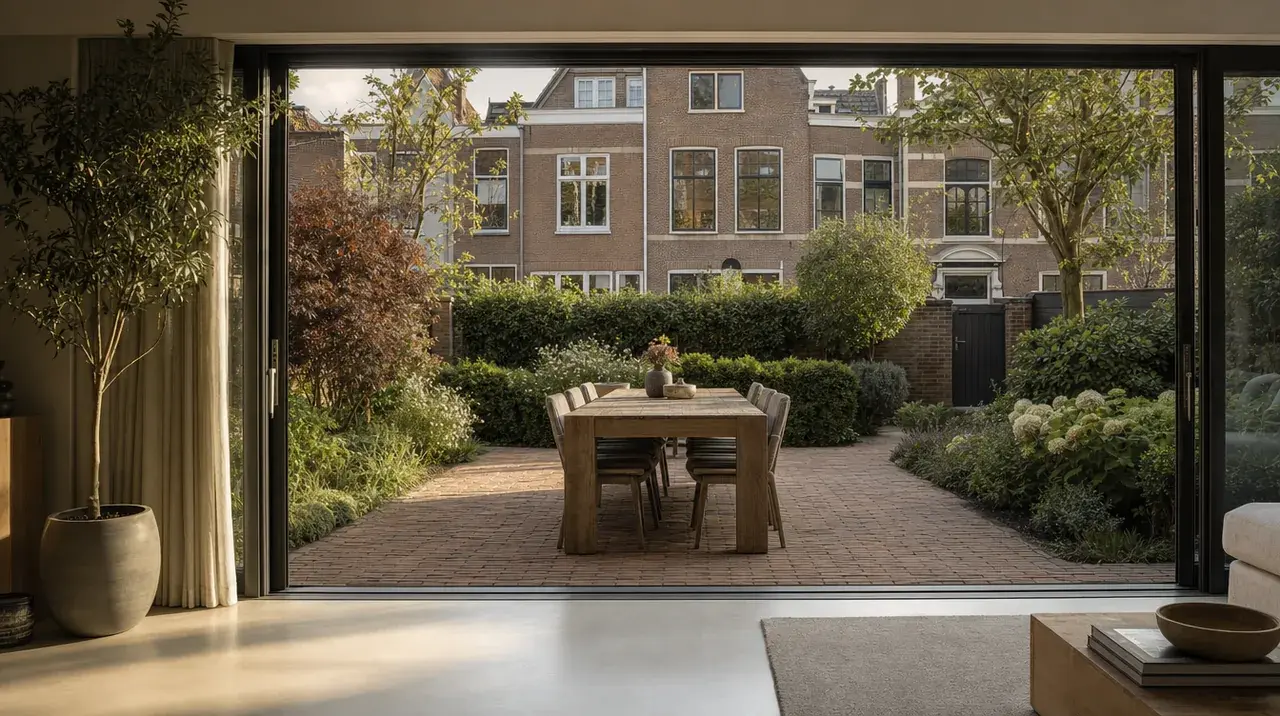
There’s a moment in Amsterdam when the sun drops behind the canal trees and the whole house glows. That warm golden hour is exactly when an indoor-outdoor connection earns its keep: doors wide, air moving, dinner on the table, and no scramble for blankets. Here’s how to design that feeling into your home-whether you live in a grachtenpand, a 30s row house in Zuid, or a top-floor apartment in Noord.
Start with flow, not just openings
Most people jump straight to big glass doors. Sensible, but first map how you’ll actually live between inside and outside. Where does coffee land in the morning? Which path carries wet kids from paddling pool to bathroom? A good plan clusters related functions across the threshold: kitchen to terrace dining; living room to lounge deck; utility to outdoor tap and storage.
For tight Amsterdam plots, aim for a simple two-step journey: inside zone (kitchen/living) → threshold (bench, hooks, planter) → outdoor room (dining or lounge). Keep thresholds level where possible; a flush sill with concealed drainage gives wheelchair/stroller-friendly movement and reduces trip hazards.
Choosing doors and windows that suit Dutch weather
Steel-look sliders vs. timber bifolds: Slim, thermally broken aluminium or steel-look sliders give maximum glass with minimal frame-great for winter light. Timber bifolds are lovely in summer but mind the stack space. In windy Noord-Holland, quality hardware and multi-point locking matter; cheap sliders rattle.
Low thresholds, high performance: Ask for a flush threshold with integrated drainage channel and a thermal break. Combine HR++ or triple glazing with warm-edge spacers to prevent condensation. Acoustic laminated glass helps on busy streets or if your terrace faces a schoolyard.
Cross-ventilation that behaves: Pair the big opening with an opposite tilt-turn window or top-hung skylight to pull a breeze without slamming doors. Fit discreet trickle vents tied to your MVHR if you have one; it keeps fresh air flowing without energy penalty.
Small plots, big possibilities: gardens, balconies, and roof space
Ground-floor gardens: Treat the first 3-4 meters outside as an “outdoor room.” Continue your interior floor pattern (e.g., oak herringbone echoed by clay pavers in a herringbone bond) to visually extend space. Add a fixed bench along a boundary with a narrow planter behind; it provides seating, storage, and privacy in one move. Choose permeable paving and a shallow French drain to handle North Sea cloudbursts.
Balconies: If you’re in a 19th/early-20th century block, balcony depth is often limited. A fold-down cafe table, a built-in cedar bench, and a slim herb rail can turn 90 cm into a daily destination. Consider a single oversized casement or a pair of French doors with a low balustrade to keep the sightline unbroken.
Roof terraces: Wonderful in our dense city, but plan shading and wind breaks. Fixed planters double as ballast and edge protection, with integrated LED uplights for that golden-hour glow. Use pale decking (thermally modified ash or composite) to reduce heat build-up.
Amsterdam realities: heritage, structure, and logistics
If your home falls under Monumentenzorg or sits in a protected streetscape, expect stricter rules on altering façades, sightlines, and joinery profiles. On canal houses, any new rear opening typically must respect existing bay rhythm and sill heights. Steel-look frames can be acceptable if profiles echo original muntins; sometimes timber is required street-side with aluminium permitted garden-side. Coordinate early via the Omgevingsloket and bring historic photos to design meetings-reviewers love precedents.
Many Amsterdam houses sit on timber pile foundations. Before cutting a large rear opening, engage a structural engineer to check settlement history and lintel spans. In gardens, avoid deep planters or water features right next to the façade; changes in groundwater can stress old piles. If you’re tempted to dig a lightwell or lower the garden, you’ll likely need an omgevingsvergunning and careful waterproofing at the plinth.
Logistics are real here. Narrow staircases and no-lift buildings make moving large sliding frames a puzzle. We often plan deliveries via the garden with temporary fencing off, or use canal-side boat drops for inner-ring projects. Ask the contractor to dimension frames to fit through the hallway turn or design them as modular units to assemble on site.
Apartments, VvE, and privacy
In apartments, your first stop is the VvE statute book. Any change to façade, balcony door type, or roof use usually needs approval. Expect requirements for acoustic performance and fire separation; glazed doors within a certain distance of the boundary may need fire-rated glass and closers. For roof terraces, the municipality will look at overlooking and access stairs. A freestanding stair on a lightweight roof can introduce vibration; consider a compact dogleg stair within the existing roof opening instead.
Privacy matters in our close-knit blocks. A 1.0-1.2 m high planter with tall grasses is softer than a screen and often avoids permit issues. Inside, add a secondary sheer behind heavier curtains so the doors can stay open without putting your living room on display.
Energy, comfort, and subsidies
Big glass isn’t an enemy of efficiency if you detail it right. Specify thermally broken frames, airtight installation tapes, insulated sills, and external shading. A simple fixed pergola with retractable fabric can cut summer gains; internal blinds help, but exterior shading is more effective.
Consider an all-electric or hybrid heat pump sized with the new glazing in mind. The Dutch ISDE subsidy can offset costs for heat pumps and solar boilers; combine with HR++/triple glazing and you’ll see both comfort and Energy Label gains. If you run MVHR, use summer bypass and slightly undercut the terrace door to maintain supply/extract balance when it’s cracked open.
Materials that bridge inside and out
Keep a consistent palette so the threshold fades away. Limewashed walls meet lime-rendered garden planters. Oak herringbone flows to clay pavers; microcement kitchen floors continue to a sealed terrazzo terrace. Choose marine-grade finishes on exterior cabinetry and specify powder-coated hardware in the same tone inside and out. For a Dutch minimalist vibe: warm oak, off-white limewash, matte black steel, and a single stone like Jura Grey or Belgian bluestone used sparingly but repeatedly.
Common mistakes to avoid
- Oversizing glass without shading, then battling summer heat and glare.
- Forgetting drainage at a flush threshold; one storm and the living room becomes a pond.
- Skipping structural checks on pile-founded houses before widening openings.
- Ordering one-piece doors that won’t navigate your staircase; modularize for Amsterdam logistics.
- Starting roof terrace works without VvE approval or permit; delays are costly mid-build.
- Ignoring acoustics; specify laminated acoustic glazing near busy streets or schoolyards.
Quick planning checklist
- Map daily routes across the threshold (coffee, cooking, laundry) and plan zones accordingly.
- Confirm if your home is listed or in a protected area; book a pre-application with Monumentenzorg if needed.
- Get a structural check for large openings and any garden level changes near the façade.
- Align with the VvE on door type, balcony works, or roof access; document decisions.
- Detail a flush sill with integrated drainage and airtight tapes; choose HR++ or triple glazing.
- Plan shading and planting for wind and privacy; test wind on the roof before finalizing layout.
- Explore ISDE options for heat pumps/solar boilers and coordinate with glazing upgrades for label gains.
Done well, an indoor-outdoor connection doesn’t just look beautiful at golden hour; it makes everyday life simpler and more comfortable, season after season. If you’d like a second pair of eyes on a sketch or permit strategy, we’re here in Amsterdam and speak both design and bureaucracy.