
Indoor–Outdoor Connection: Moody Evening Renovation Ideas for Amsterdam Homes
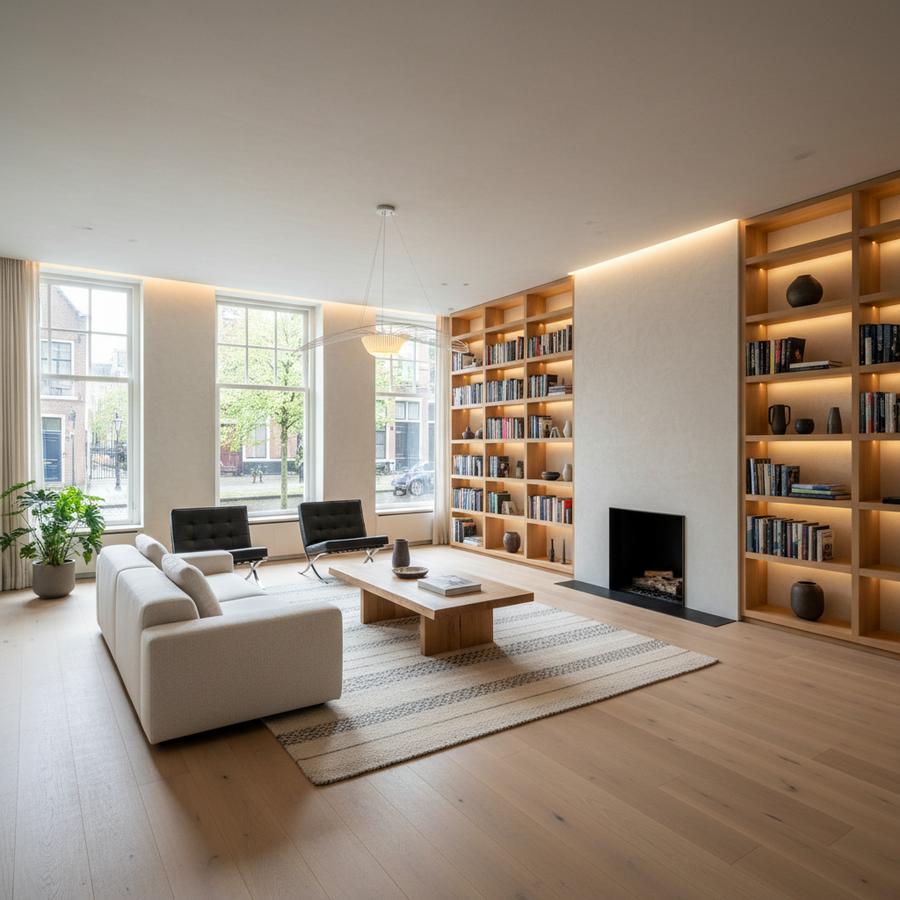
On most Amsterdam evenings, the light drops early and the street quiets. That’s exactly when a good indoor–outdoor connection pays off: a living space that still “borrows” the garden’s depth, with warm dimmed light, good sightlines, and a door you actually enjoy sliding open even in shoulder seasons. Below are practical ways to stitch inside and out for Amsterdam and broader Noord-Holland homes—ground floors, souterrains, and even roof terraces—without fighting the realities of heritage rules, neighbors, and weather.
Start with mood, not square meters
Before talking door systems, decide the evening atmosphere you want. Moody doesn’t mean dark; it means controlled contrasts. Inside, think warm 2700K lighting on dimmers; outside, a handful of low-glare markers (step lights, a wash on brick, a gentle uplight on a tree) so the garden reads as a calm extension rather than a black mirror. Plan the lighting early so cable runs hide under decking, in planter edges, or behind new skirting.
Orientation matters. Many Amsterdam gardens are shaded by neighboring walls; that’s fine for summer, but on spring and autumn evenings you’ll appreciate wind protection from the west and south-west. A simple L-shaped bench with a high back, a pergola with retractable fabric, or a hedge can make the outdoor “room” usable longer without turning the house into a conservatory.
Openings that actually work in Dutch weather
For a compact city garden, two things matter most: a flush threshold and glass you can live with year-round. A steel or timber sliding door with thermally broken frames and HR++ or triple glazing keeps winter bills down and makes evening use pleasant. If you love slim profiles but live in a protected facade, slender timber frames with monumentenglas (thin double glazing) can meet Monumentenzorg expectations while improving comfort. Always confirm details with the municipality when your home is listed.
Flush thresholds are worth the detailing. Ask your contractor for a linear slot drain just outside the door, a recessed track, and a gentle fall (1–2%) away from the house. In Noord-Holland’s frequent showers, that capillary break prevents water creeping in, and it’s safer for prams and wheelchairs. Pair it with textured stone or thermally treated ash decking for grip in wet conditions.
Acoustics are often overlooked. Laminated acoustic glass keeps patio conversations from bouncing into neighbors’ bedrooms and softens the rumble of nearby tram lines. Inside, use curtains in a dense wool or recycled felt; they add evening texture and help with echo once the doors are open.
Amsterdam specifics: souterrains, piles, and logistics
Many canal-belt and 19th-century homes have a bel-etage living floor and a souterrain opening to the garden. If you’re lowering a souterrain floor to gain headroom at the garden side, check the pile foundation first. Heavy new glazing and a deeper floor can change moisture behavior; you may need a drained slab and interior waterproofing to avoid damp. Keep new external ground levels at least 150 mm below interior floor level, even with a flush track—your slot drain and falls will do the work.
For rijks- or gemeentemonumenten, expect a longer route. Altering openings, even at the rear, may require an omgevingsvergunning and approval from the heritage advisor. Early sketches with section details (profiles, glazing type, threshold) help speed decisions. If the VvE owns the rear facade, get VvE consent first—most statutes require a 2/3 majority for facade changes.
Logistics are real. Amsterdam’s staircases won’t forgive a 2.8 m pane of glass. Budget for a façade removal and street permit or a canal-side crane/boat lift for large elements. It’s routine here—but it does need coordination, deposits for street protection, and a clean schedule to minimize disruption.
Roof terraces and balconies: connection without a garden
No garden? A balcony or roof terrace can do the same job if you treat it as a room. Structurally, get an engineer’s sign-off; older timber beams and pile foundations need checks before adding planters, decking, or an outdoor kitchen. For a roof terrace, you’ll usually need VvE approval and a permit. Wind is fierce above the canal roofs; use glass wind screens with acoustic interlayers and leave parapet heights compliant with the omgevingsplan. Privacy screens should be set inboard to avoid disputes.
Choose resilient finishes: porcelain pavers on pedestals drain well and are lighter than stone. Integrated planters can hide lighting and wiring; use lightweight substrate and drought-tolerant planting to reduce structural load and maintenance.
Evening comfort: heat, light, and energy
For that moody evening look, layer light sources: a dimmed pendant just inside the door, a wall washer across limewash or clay paint, and a low-level strip along the threshold to visually pull you outside. Outdoors, keep fittings warm and discreet (indirect wall lights, step lights, and a single focal uplight). Use IP65-rated fixtures and marine-grade finishes; Noord-Holland’s salty air near the IJ can be tough on lesser metals.
Heating: electric infrared panels or a sheltered bio-ethanol burner extend the season without flues. If you’re planning larger energy upgrades, check the ISDE scheme from RVO for subsidies on insulation and heat pumps. Replacing single glazing with HR++/triple glass and insulating floors or facades can improve your energy label and may qualify for contributions—useful when you’re adding large openings. See the current rules at RVO ISDE.
Permissions and good neighbor policy
Even when a rear facade faces a private garden, changes can need an omgevingsvergunning. Check the municipality’s guidance at Gemeente Amsterdam. For listed properties, confirm with Monumenten. If you live in an apartment block, your VvE may treat terraces, balconies, and facades as common parts—get written approval before you order doors.
Late-evening use calls for courtesy: angle outdoor speakers toward the house, keep lighting below eye level to avoid glare over fences, and choose soft landscaping to absorb sound. Amsterdam enforces nuisance rules; designing for quiet enjoyment keeps everyone friendly.
Checklist: plan your indoor–outdoor connection
- Define your evening mood: where do you sit, what do you light, what do you hear?
- Choose the opening: sliding vs. hinged; target U-value, acoustic class, and a flush threshold with proper drainage.
- Detail materials for Dutch weather: non-slip decking, durable timber or aluminum, and marine-grade exterior hardware.
- Map permits and stakeholders: VvE approval, heritage review, and an omgevingsvergunning if altering openings.
- Engineer the basics: foundation/pile check for heavy glazing, roof terrace loads, and waterproofing for souterrains.
- Plan logistics: crane/boat lifting for large panes, street permits, and protection for historic facades during works.
- Wire for light and comfort: dimmers, exterior IP-rated circuits, and provisions for future heaters or shading.
Done well, an indoor–outdoor connection in Amsterdam feels effortless on a moody evening: doors slide, light glows softly, rain moves away from the threshold, and the garden reads like an extra room. The trick is in the detailing—small, local choices that respect the house and the street while giving you a space you’ll use nine months of the year.