
25 January 2026 · 6 min read
Built-in Storage That Feels Native to an Amsterdam Home
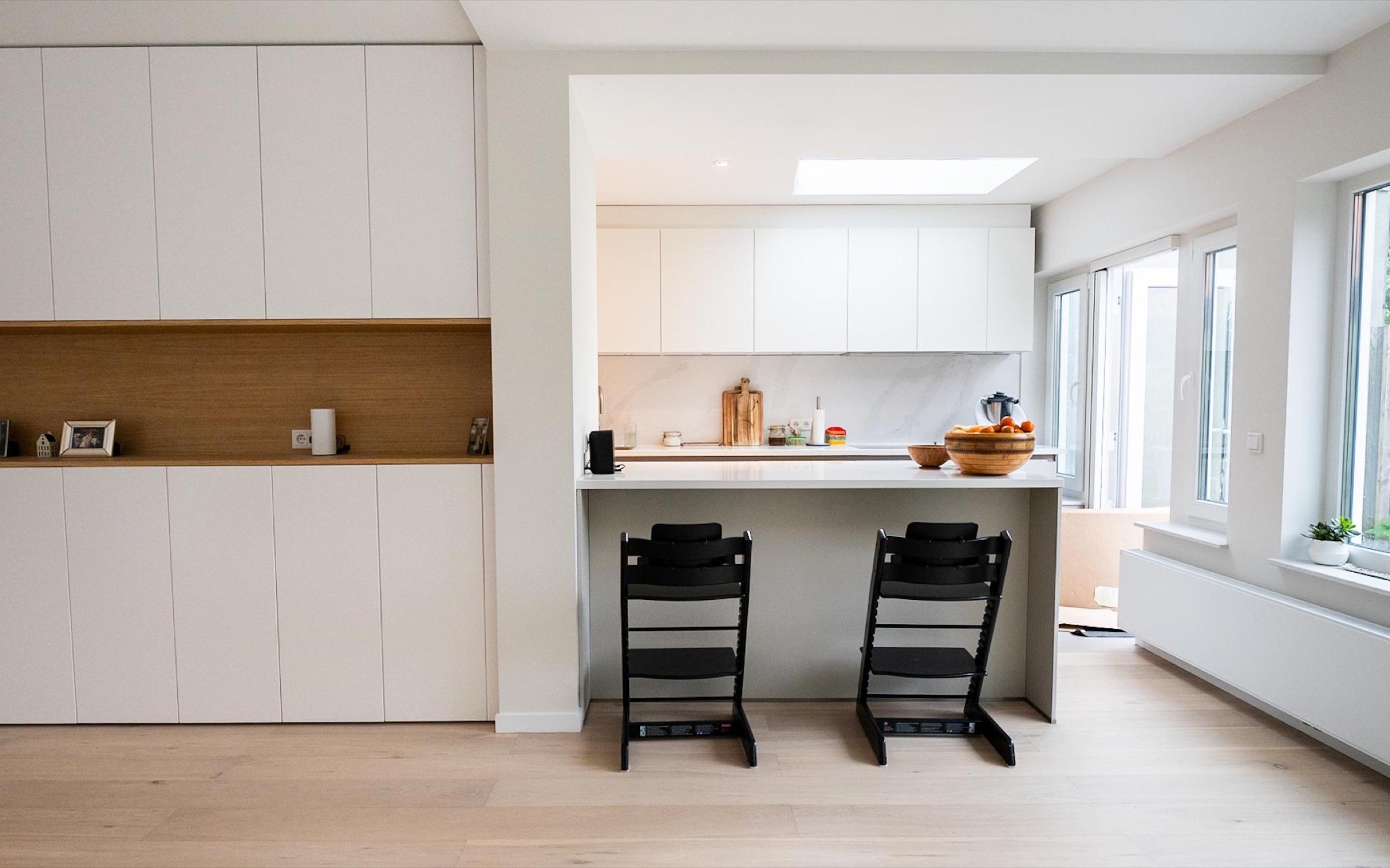
There’s a moment late in the day when the house softens-golden light slides across the floor and the rooms feel generous again. Good built‑in storage helps you hold onto that feeling. It’s not just somewhere to hide stuff; it’s a calm backdrop that lets daily life take center stage. In Amsterdam and across Noord‑Holland, where floor area is precious and walls are often quirky, built‑ins can feel less like furniture and more like architecture.
Find the space you already have
Before sketching doors and handles, walk your home and look for volume you’re not using. In canal houses, the recesses beside fireplaces and the void under steep stairs are classics. In 1930s portiekwoningen, there’s often generous wall depth around chimney stacks and between structural piers. In newer apartments, ceiling drops hiding ventilation or sprinkler lines can accept shallow, full‑height cupboards.
Great candidates include: a window seat with drawers in a deep jamb; a wall‑to‑wall shelving ribbon that floats above a sofa; a bed platform with lift‑up storage; under‑eaves cupboards in the zolder; and a hallway bench with shoe drawers and coat niches. Even a meter cupboard can hide a slim cleaning closet if you respect clearances and access.
Materials and details for calm, modern Dutch minimalism
To keep rooms bright and timeless, we often pair limewashed walls with oak or ash veneer, birch multiplex interiors, and a few matte black or brushed stainless accents. Linoleum‑faced doors (Forbo) bring a soft, tactile surface that hides fingerprints. Where budgets prefer resilience, Fenix or high‑pressure laminate performs well without shouting.
Details matter. A 10-15 mm shadow gap where cabinetry meets walls and ceiling makes units look built‑in but not bulky. Consider integrated finger pulls or discreet edge pulls; push‑to‑open can be lovely, but in family homes door alignment drifts with use. Add soft LED strips set to 2700K for a warm evening mood, and line the back of open shelves with the same wall finish so objects sit quietly.
Don’t forget acoustics. Perforated panels or fabric‑backed doors at media walls can hide speakers while taming echo in high‑ceiling canal rooms. And if you’re wrapping a radiator with a seat or cover, specify slotted or grille fronts and allow airflow; low‑temperature systems need breathing space.
Amsterdam realities: approvals, logistics, and old bones
If your property is a rijksmonument or gemeentelijk monument, Monumentenzorg can limit fixings to historic beams, window frames, or plaster details. The rule of thumb is reversibility: design units that clamp to floors and walls via minimal, non‑destructive fixings, or distribute loads through plinths rather than drilling into fragile masonry. Even repainting or altering radiators in sightlines can be sensitive-check first to avoid delays.
In VvE‑managed apartments, built‑ins normally fall under private domain, but anything touching shared elements-façade walls, chimneys, shafts-may require VvE approval. Add it to your timeline. Likewise, noise rules may restrict evening installation work. And remember Amsterdam logistics: narrow trapgevel staircases and tight portieken mean large pieces rarely fit. We design millwork in knock‑down modules that fit through a 70-80 cm door and assemble cleanly onsite. For canal‑side addresses, boat delivery or a moving lift can be worth the permit fee to keep neighbors happy.
Weight is another local consideration. Older joists in grachtenpanden were sized for different lives. A floor‑to‑ceiling book wall in solid oak can add hundreds of kilos to a single bay. Use lightweight interiors (birch multiplex, honeycomb tops), spread load over multiple joists with a continuous plinth, and avoid stacking heavy volumes at the edge of a span. When in doubt, a quick structural check is cheaper than repairs later.
Room‑by‑room inspiration that works
Hallway: A 38-45 cm deep bench with drawers swallows shoes; a 30 cm deep coat niche keeps bulk off the corridor. Add a wall‑mounted mirror cabinet over a shallow shelf for keys and helmets. Use durable laminates and a raised plinth for wet days.
Living room: Build a low, floating credenza that hides cables and modems, with an oak or linoleum top for warmth. Wrap a window with a deep sill and side shelves to create a reading perch. If a radiator sits below, convert to a convector with grille and leave 80-100 mm airflow behind doors.
Kitchen and dining: In tight rooms, a 30 cm deep tall pantry with pull‑outs can hold dry goods without eating floor area. A banquette with lift‑up seats doubles as storage and frees circulation compared to chairs. Consider a slim “tea and tech” cupboard for kettle, coffee, and charging-doors close and the surface disappears.
Bedrooms: Wall‑to‑wall wardrobes feel intentional when aligned with window heads and door casings. Mix full‑height hanging with 50 cm deep drawers and a narrow “valet” bay for next‑day outfits. Platform beds with hidden storage are ideal for top‑floor rooms under sloped roofs.
Home office: A pocketable workstation behind bi‑fold doors keeps work out of sight. Add a ventilated printer niche and a cable tray with service panels-you’ll thank yourself later. Acoustic panels disguised as pinboards soften echo on video calls.
Bathroom and laundry: Shallow mirrored cabinets set between studs keep the room generous. In the berging, stack washer/dryer behind louvered doors; include drip trays and a pull‑out fold shelf to prevent mess on wet days.
Moisture, ventilation, and energy pragmatics
Canal houses and ground‑floor apartments can run cool at exterior walls. Full‑height cabinets on a cold façade risk condensation. Keep 10-20 mm ventilation gaps at the back, break long runs with open niches, and avoid sealing skirting so air can circulate. If you’re planning inner‑wall insulation (which may be eligible for ISDE subsidy when part of a broader energy upgrade), coordinate sequence: insulate first, then build in, and include service voids so you don’t puncture the new vapor barrier.
Never block crawl‑space vents or mechanical ventilation grilles. Where ducts pass through cabinetry, create lined chases with access panels-inspectors (and future you) will want to reach them.
Budget, timing, and what to expect
For custom millwork in the region, expect a simple painted alcove unit to start around €2,500-€5,000, a wall‑to‑wall living room system around €6,000-€12,000, and a fully detailed wardrobe suite from €8,000-€18,000, depending on materials and interior fittings. Site conditions, access, and finishes (spray‑painted vs. hand‑painted, veneer vs. laminate) move the needle.
Lead times typically run 6-10 weeks from sign‑off to installation. If Monumentenzorg or a VvE needs to approve, add 4-8 weeks to the front. To keep life flowing, we often phase projects: start with the hallway and living room, learn from daily use, then tackle bedrooms with confidence.
Quick checklist: make your built‑ins last
- Measure honestly: note skews, out‑of‑plumb walls, radiator positions, and door swings.
- Plan approvals early: Monumentenzorg and VvE can affect fixings, radiators, and façades.
- Design for airflow: vent backs, respect radiators and ventilation grilles.
- Think access: removable panels for valves, sockets, meters, and ducts.
- Choose resilient finishes: linoleum, veneer with hardwax oil, or quality laminates at high‑touch areas.
- Modularize for narrow stairs: break big pieces into lift‑friendly sections.
- Distribute load: continuous plinths and lightweight cores on older joists.
Done well, built‑in storage doesn’t demand attention-it frees it. When the sun drops and your rooms go quiet, the work is invisible, but the calm is unmistakable.