
Smart Home Energy in Amsterdam: A Modern Upgrade Guide That Actually Works
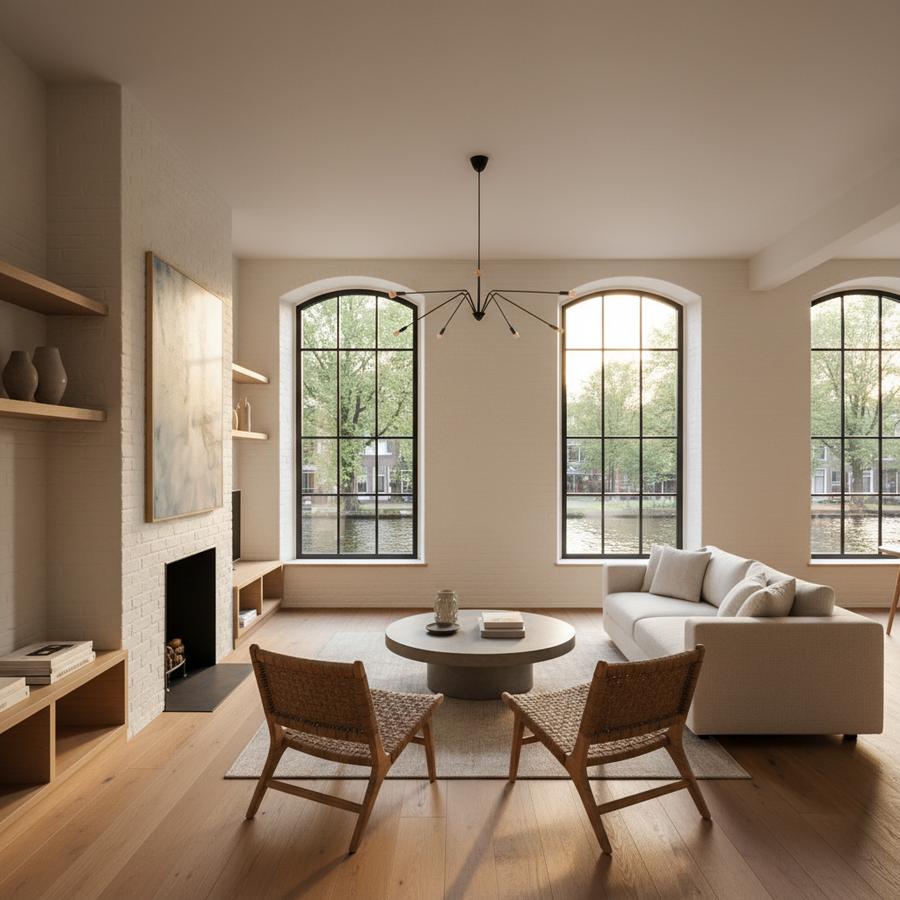
Smart home energy isn’t about novelty gadgets. It’s about lowering bills, cutting carbon, and making your home easier to live in—without turning your weekend into a wiring project. In Amsterdam and across Noord-Holland, the winning upgrades respect local realities: tall canal houses with timber floors and narrow stairs, VvE approvals, Monumentenzorg restrictions, and the Dutch grid’s quirks. Here’s a clear, coffee-table guide to the upgrades that actually work here, and in what order to do them.
Start with the data you already have
Before buying hardware, map your home’s energy profile. Your Dutch smart meter’s P1 port can feed live data to an energy app or hub. One afternoon of graphs often reveals the low-hanging fruit: a night-time base load that’s too high, a boiler cycling unnecessarily, or a hot water schedule that runs while you’re at work.
Add a few battery-powered temperature and humidity sensors in typical problem spots: the top floor under the roof, a north-facing bedroom, and the bathroom. This helps you tune ventilation and heating zones later without guesswork, and it’s a low-cost way to see where insulation will actually pay back.
Heating you can actually control (and afford)
For most Amsterdam homes, the biggest wins are in heating control rather than replacing the entire system on day one. If you have radiators, install smart thermostatic radiator valves (TRVs) and a smart thermostat that supports zoning. Schedule bedrooms cooler and living areas warmer only when used. Pair this with weather-compensation or open-window detection, and you’ll often see 10–20% savings without touching the boiler.
Next, get “heat-pump ready.” Lower the supply temperature on your boiler as far as comfort allows (start with 60°C, then step down). Balance radiators and consider adding one or two oversized radiators or a small low-temperature fan-assisted unit in the main living space. This ensures that when you do add a hybrid or full heat pump, it can run efficiently without major disruption.
If you’re moving directly to a hybrid heat pump, check outdoor unit placement. Dutch noise limits are strict (around 40 dB at the property boundary in evening/night hours), so choose a quiet unit, add anti-vibration mounts, and avoid wall brackets on thin party walls. Flat roofs at the rear often work well with a simple isolation pad and airflow clearance.
Solar, storage, and EV: making the grid work for you
Solar on Amsterdam roofs is better than you might think, even with partial shading from dormers or neighboring trees. Consider microinverters or power optimisers for shaded arrays and keep string lengths modest. On flat roofs, ballasted frames keep the membrane intact and are usually VvE-friendly if you maintain walk paths and drainage access.
Home batteries are becoming attractive as netting rules tighten and dynamic tariffs spread. Focus on safety and weight: lithium iron phosphate (LFP) chemistry, a dedicated fire-resistant location, and distributed wall-mounted modules rather than one heavy floor-standing block—especially in canal houses with timber floors on pile foundations. For EV owners, a wallbox with dynamic load balancing is essential on Dutch 1-phase supplies; if you plan a heat pump and induction cooking, it may be worth upgrading to 3-phase with your grid operator (Liander, Stedin, or Enexis) to avoid nuisance trips.
Don’t forget smart scheduling. Link solar forecasts to your hot water tank or buffer, shift dishwasher and washing machine cycles to midday on sunny days, and charge the EV when tariffs dip. This “software-first” approach often delivers more value than simply adding capacity.
Amsterdam specifics: VvE, Monumentenzorg, and what flies with the gemeente
If you live in an apartment, your VvE likely controls the roof, façade, and shared risers. Solar arrays, exterior heat pump units, and EV chargers in shared garages all require VvE approval. Arrive prepared: bring a simple layout drawing, load calculations for the shared electrical connection, and a maintenance plan. VvE’s increasingly favour modular solutions (microinverters and modular batteries), because they scale and are easier to service without disturbing neighbours.
In protected cityscapes or for listed buildings, Monumentenzorg has a say. Visible solar panels on the street-facing roof are often restricted, but panels on rear slopes or flat inner roofs can be acceptable. External ductwork and heat pump units should be hidden from public view where possible. Internal upgrades—smart controls, low-temperature radiators, floor heating under removable finishes—are usually fine. Always check with the municipality’s permit desk early; a short pre-application saves months later.
Logistics in narrow, vertical homes
Amsterdam’s staircases are famous (and not for their width). Choose gear that can be carried in modular pieces: split heat pump systems with compact indoor units, sectional battery packs, and radiators that can be brought up in parts. If you’re on a gracht with a monument façade, ladders or a small crane/boat lift may be required; plan delivery routes and secure time slots to minimise street disruption.
Respect the structure. Many older homes sit on timber pile foundations. Avoid concentrating heavy equipment on one spot, especially near exterior walls or on old attic floors. Wall-mount lighter modules across multiple studs, and use anti-vibration pads to stop hum travelling through wooden joists. These details are small, but they keep homes quiet and neighbours happy.
Money, subsidies, and payback
Two Dutch supports matter most for homeowners: the ISDE subsidy for heat pumps, solar boilers, and insulation, and additional VvE-targeted schemes for collective measures and energy advice. ISDE can significantly reduce the upfront cost of a heat pump; verify current amounts and equipment lists via the RVO. Upgrades that improve your Energy Label also add resale value in Amsterdam’s competitive market.
Payback varies by home. As a rough guide: smart zoning and schedules can pay back in a year; solar in 5–9 years depending on roof and tariff; hybrid heat pumps in 5–10 years depending on gas prices and control strategy. Stack benefits: combining low-temperature heating, good controls, and some daytime solar self-consumption brings the quickest wins.
A quick, Amsterdam-proof decision checklist
- Data first: Connect the P1 port, log two weeks of usage, and identify base load and heating patterns.
- Zoning: Add smart TRVs and a zoning thermostat; lower boiler flow temperature stepwise.
- Heat-pump ready: Balance radiators, consider one oversized emitter, and plan outdoor unit placement with noise in mind.
- Solar feasibility: Photograph the roof at 9/12/15h for shade checks; choose microinverters if shading is present.
- Electrical capacity: Decide if 3-phase is worthwhile; add dynamic load balancing for EV and heat pump.
- Approvals: Prepare drawings and specs for VvE and check Monumentenzorg/permit requirements early.
- Subsidies: Confirm ISDE eligibility and keep invoices/photos for claims.
If you tackle one step per month—data, zoning, heat-pump readiness, solar, then storage/EV—you’ll feel comfort improve immediately, not just on the day your energy bill arrives. And because each move respects Amsterdam’s constraints, you avoid the two biggest risks: buying kit you can’t install, and installing kit you can’t live with.