
Amsterdam Kitchens: 10 Common Mistakes (and Smarter Fixes)
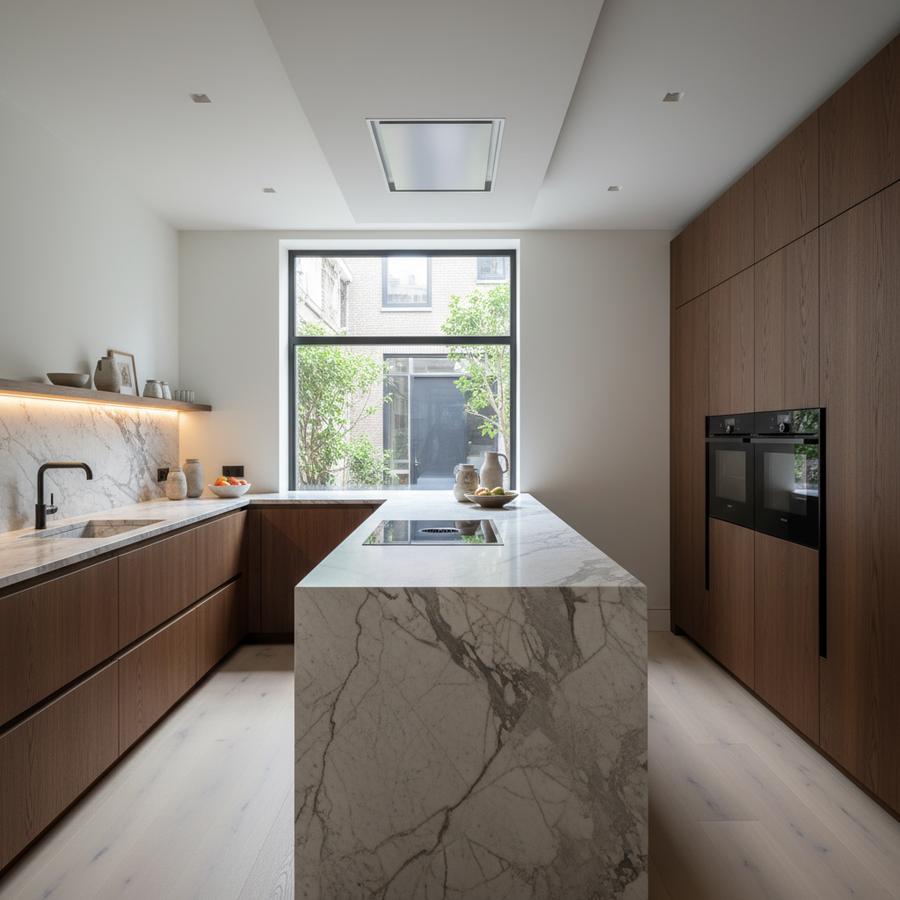
Amsterdam kitchens are full of charm and challenges: narrow rooms, steep stairs, old timber floors, and—if you live in a protected building—Monumentenzorg constraints. After designing and renovating dozens of kitchens across the city, we see the same mistakes again and again. Here are the most common pitfalls and the fixes that truly work in Amsterdam and Noord-Holland.
Mistake 1: Forcing an island where it doesn’t fit
Many canal houses and post-war apartments simply aren’t wide enough for an island. If you can’t maintain 100–110 cm clear walking space on all sides (90 cm absolute minimum), the island will cramp circulation and doors will collide.
Solution: In narrow formats, consider a generous peninsula, a slim 60–70 cm deep prep table, or a galley with staggered work zones. Use shallow tall storage (35–40 cm) opposite standard-depth runs to keep a 120 cm corridor. Waterfall edges and flush plinths can visually lighten compact peninsulas.
Mistake 2: Ignoring power requirements when going all-electric
Amsterdam is steadily moving away from gas. Induction hobs and combi ovens are great—but they can overload older single-phase connections. Upgrading to 3x25A often involves lead time with the grid operator and coordination in apartments.
Solution: Ask an electrician to calculate loads early. Plan for 3-phase if you want a powerful induction hob and multiple ovens. Expect a lead time and potential meter cupboard adjustments with your netbeheerder. Use dedicated groups for appliances, and consider smart load balancing if a full upgrade isn’t possible. ISDE subsidies exist for heat pumps and insulation, not for induction, but planning the electrical backbone now future-proofs the home (RVO – ISDE).
Mistake 3: Venting without approvals (Monuments and VvE)
Cutting a new facade vent in a protected canal house or even in a typical VvE apartment can be prohibited. Monumentenzorg often disallows front elevation vents, and VvEs typically restrict changes to shared shafts or external walls.
Solution: Verify rules before design. In monuments, opt for a high-performance recirculating hood with plasma/ceramic-carbon filters and precise capture zones. If a duct is allowed, route to the rear elevation or an existing, approved shaft and detail the termination discreetly. Get written VvE consent and, if applicable, consult the municipality’s Monumenten & Archeologie team early (Gemeente Amsterdam – Monumenten).
Mistake 4: Overloading old floors with heavy stone
Thick natural stone islands and full-height appliances can overload older timber joists on pile foundations. We’ve seen cracked tiles and bouncy floors where mass wasn’t considered.
Solution: Ask a structural check for point loads. Use honeycomb or 12 mm thin-porcelain slabs for the look of stone at half the weight. Distribute weight with a continuous plinth frame rather than four legs. If needed, stiffen joists from below during renovation. Avoid stacking tall cabinetry and appliances all on one weak span.
Mistake 5: Blocking scarce daylight and sightlines
Many Amsterdam kitchens are north-facing or deep in plan; bulky wall units can make them feel gloomy.
Solution: Keep the window wall light: open shelves for daily-use items, concealed lighting under shallow cabinets, and reflective, limewashed walls to push daylight deeper. Choose handleless matte fronts to reduce visual clutter. Where possible, align the sink or prep zone with the view to the courtyard to make the room feel larger.
Mistake 6: Forgetting moisture and ventilation in damp buildings
Older masonry can be sensitive to steam. Without controlled ventilation, you’ll invite mould behind cabinets.
Solution: Pair a high-capture hood with quiet continuous extract (where allowed) or tie into the home’s mechanical ventilation strategy. Keep a 20–30 mm air gap to cold external walls behind tall units. Specify vapor-permeable paints and seal worktops carefully at splash zones. In retrofit MVHR (System D), use dedicated kitchen valves and fine-tune airflow during commissioning.
Mistake 7: Underestimating logistics, noise, and work windows
Steep staircases, tight Gemeente access, and canal-side streets complicate deliveries. Many VvEs restrict noisy works to specific hours.
Solution: Plan delivery via window hoist if stairs are impossible. For larger lifts or sidewalk occupation, check permit needs and schedule outside rush hours. Protect common areas meticulously to keep neighbours onside. Align demolition and drilling within allowed timeframes and inform the VvE in advance.
Mistake 8: Buying before measuring staircases and windows
Ordering a 90 cm deep fridge or a 3 m slab without a measured route is a classic Amsterdam error.
Solution: Create a delivery route plan with maximum widths, turns, and window dimensions. Split long countertops, choose knock-down cabinet carcasses, and confirm appliance delivery options. When in doubt, a site mock-up saves money and apologies later.
Mistake 9: Skimping on storage planning for Dutch living
Recycling bins, tall bottles, broodtrommels, and the ever-growing coffee setup all need a home. Random drawers won’t cut it in compact kitchens.
Solution: Design zones: prep, cook, clean, coffee/breakfast, and recycling. Use 1.5-bowl or large single sinks with integrated accessories. Go vertical with 2.4 m tall units where ceilings allow, but keep one lighter wall to preserve openness. Deep drawers (with inner drawers) outperform doors for pans and dry goods.
Mistake 10: Forgetting permits, lead times, and sequencing
In protected buildings, even a change to the exterior vent cap can need approval. Lead times for custom fronts, thin stone, or steel frames are longer than you think.
Solution: Lock the sequence early: approvals, structural checks, electrical upgrade, rough-in, cabinets, worktops, appliances, then finishing. Order special materials first. Build a two-week buffer for templating and worktop fabrication. Keep a contingency for unforeseen issues in old walls and floors.
Amsterdam-specific smart moves
Two local tips we apply often. First, in canal houses under Monumentenzorg, we favor a “light-touch” kitchen: freestanding-looking base units with integrated toe ventilation and minimal wall fixings, so historic plaster and beams remain intact. Second, if floor levels vary between front and back rooms, use a subtle plinth ramp rather than packing shims under every cabinet—your doors will align, and the result looks intentional.
Quick decision checklist (5–7 minutes to sanity-check your plan)
- Clearances: Do you have 100–110 cm around islands and 120 cm in galley corridors?
- Power: Has an electrician confirmed groups and 1- vs 3-phase needs for induction and ovens?
- Venting: Are VvE/Monumentenzorg rules checked, with a Plan B recirculating hood specified?
- Structure: Have loads for stone tops/appliances been reviewed for old timber joists?
- Logistics: Is there a measured delivery route or hoist plan, with permits if needed?
- Ventilation/Moisture: Is there a continuous extract or MVHR plan and wall air-gaps behind tall units?
- Sequencing: Are lead times, templating, and noisy work windows aligned with neighbours and VvE?
Designing an Amsterdam kitchen is about respect for the building, honest measurements, and a few clever tricks. Avoid these common mistakes, and your kitchen will cook beautifully—and age gracefully with the home around it.