
Small Amsterdam Kitchens: Fixing the 7 Layout Traps That Waste Space
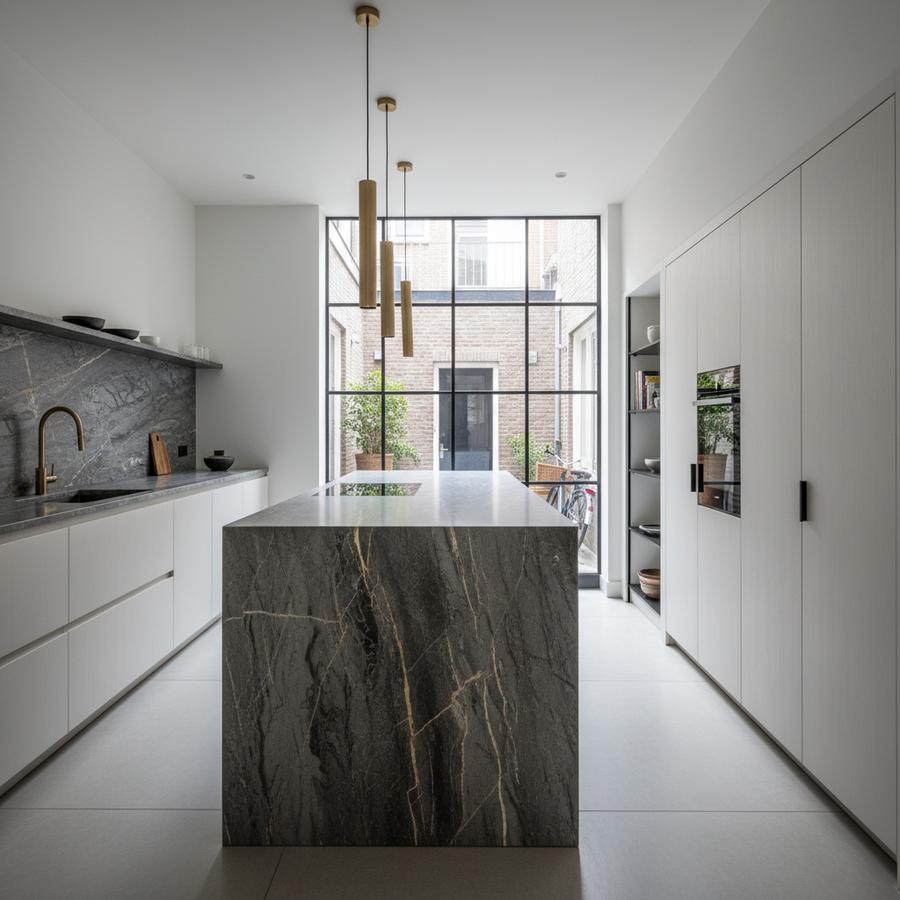
Small kitchens in Amsterdam can be brilliant to live with—if they’re planned with ruthless clarity. The biggest enemy isn’t square meters, it’s bad decisions: a door in the wrong spot, a too-deep cabinet, an appliance that blocks a drawer. Below, the seven traps we see most in canal houses, portiekwoningen and nieuwbouw apartments, and the fixes that make these spaces work hard without feeling cramped.
1) The false “work triangle” in a narrow room
The trap: Forcing a classic sink–hob–fridge triangle into a 1.8–2.2 m wide room creates crossed paths and hip bumps. In many Amsterdam galleys, that triangle becomes a zigzag.
The fix: Think linear zones, not triangles. Keep prep between sink and hob on one continuous run; park the fridge at the entry or opposite wall so it can open without blocking traffic. Aim for a clear 100–105 cm walkway between opposite runs; if you only have 90 cm, keep one side shallow (30–40 cm) for coffee/landing rather than full-depth cabinets.
2) Corner cabinets that swallow everything
The trap: In tiny L-shapes, corner units become dark voids. Swing trays look clever but steal volume and break easily in old, out-of-square walls.
The fix: Trade the corner for straight, reachable storage. Terminate one run before the corner and use full-height pull-out pantries (30–45 cm wide) or internal drawers. You’ll lose theoretical liters, but gain items you actually find. If you must keep the corner, specify a fixed shelf for rarely used gear and prioritize drawers everywhere else.
3) Oversized appliances in undersized rooms
The trap: Standard 60 cm everything: big oven, big dishwasher, tall fridge. Doors clash, aisles shrink, and you lose vital prep space.
The fix: Right-size to your habits. A 45 cm dishwasher and a combi oven–microwave free 15–30 cm of counter. If you shop often (hello, buurtmarkt), use an undercounter fridge plus a tall dry-goods pantry. Choose a 60 cm induction with bridge zones over a 75 cm model; it cooks the same, saves 15 cm of top space, and usually eases electrical load planning.
4) Wall cabinets that make the room feel heavy
The trap: Chunky uppers at eye level that close in a narrow kitchen, especially in deep colours.
The fix: Go lighter and higher. Use 30–35 cm deep uppers, start them 55–60 cm above the worktop, and run them to the ceiling with a tidy scribe panel to avoid dust ledges. Balance with one open rail or a shallow niche for daily items. Below the counter, specify full-extension internal drawers—more expensive than doors, but they double actual accessibility in tight footprints.
5) Lighting that glares instead of guides
The trap: One bright ceiling downlight makes a small, dark kitchen feel harsher—and throws your shadow onto the worktop.
The fix: Layered, dimmable light. Continuous under-cabinet LEDs (3000K) for task lighting, a soft wall-wash or shelf light to expand the room visually, and one small ceiling or pendant for mood. On dark fronts (smoked oak, matte charcoal), specify high CRI strips so food doesn’t look grey. Put everything on two circuits with dimmers: task on/full, ambient low for a calm evening cook.
6) Ventilation that fights the building
The trap: Recirculating hoods that don’t cope with Dutch frying habits—or, conversely, drilling a duct through a protected canal-house facade without permission.
The fix: In VvE buildings or Monumentenzorg-protected streets, get written approval before any external ducting. If a rear facade or existing ventilation shaft is available, use a quiet, high-capture hood (deeper canopy, 50–60 cm above induction) with a backdraft damper. If you must recirculate, choose quality charcoal/plasma filters and plan easy access for 3–6 month changes. A simple, wipeable backsplash and a make-up air gap under the door keep odours down in tight envelopes.
7) Ignoring Dutch logistics: stairs, power, and noise
The trap: Ordering a one-piece 3 m worktop and a 2.3 m tall cabinet for a third-floor apartment—then discovering your 70 cm-wide Amsterdam stairs and tight draaicirkel say no.
The fix: Design for the route. Use split countertops with a near-invisible seam over the dishwasher, modular tall units, and appliances that fit a verhuislift or hoisting beam if needed. Measure door widths, stair winders, and landing diagonals before finalizing cabinet sizes. In many canal houses, a temporary hoist via the front gable saves the project schedule.
Power planning: Switching to induction often means checking your groupenkast. Many homes run 1x35A; 3x25A is common for upgrades. Coordinate with your netbeheerder early—lead times can stretch—and use a cooktop compatible with the supply you’ll actually have on move-in day. Keep noisy compressors (wine fridges) off party walls; VvE house rules on noise can be strict.
Materials that make small feel generous
Dark, moody kitchens can still feel open. Pair low-sheen, tactile finishes—like limewashed walls, smoked oak veneer, and matte anti-fingerprint laminates—with a single continuous worktop material for visual calm. Belgian bluestone (arduin) or honed quartzite brings depth; just seal properly around the sink. Choose integrated pulls or slim black steel rails to avoid visual clutter. Underfoot, a cork underlay beneath herringbone engineered oak helps with impact sound in apartments while satisfying many VvE noise requirements.
Ergonomics for tall Dutch cooks (and everyone else)
Standard Dutch counter height hovers around 92 cm, but tailor it to your elbow: stand relaxed, bend your forearm to 90°, then set the worktop roughly 10–15 cm below your elbow point. Often that’s 92–95 cm in Amsterdam homes. Keep the primary prep zone 80–100 cm wide between sink and hob. Bin drawers belong under that zone, not across the aisle. If two people cook, give the second person a satellite task spot: a 40 cm board over a washer, or a shallow landing opposite the hob.
Quick decision checklist for a flawless small kitchen
- Route first, design second: Will every cabinet and worktop piece pass through doors and stairs—or do you need a verhuislift or hoist?
- Zones, not triangles: Is prep sandwiched between sink and hob with 80–100 cm of clear counter?
- Right-size appliances: 45 cm dishwasher? Combi-oven? Under-counter fridge plus tall pantry?
- Ventilation permission: Do you need VvE/Monumentenzorg approval to duct out? If not possible, which recirc filters will you maintain?
- Electrical reality: Is your groupenkast ready for induction (1x35A vs 3x25A)? Have you scheduled any netbeheerder upgrade?
- Drawer-first storage: Full-extension internal drawers below waist; lighter, shallower uppers above.
- Light in layers: Separate dimmable circuits for task and ambience; high-CRI strips under cabinets.
Plan with these constraints in mind and your small Amsterdam kitchen becomes more than workable—it becomes quietly enjoyable. Fewer movements, fewer clashes, more calm. That’s the real luxury in a tight footprint.