
The Logistics-First Canal House Renovation: Stairs, Access, Staging
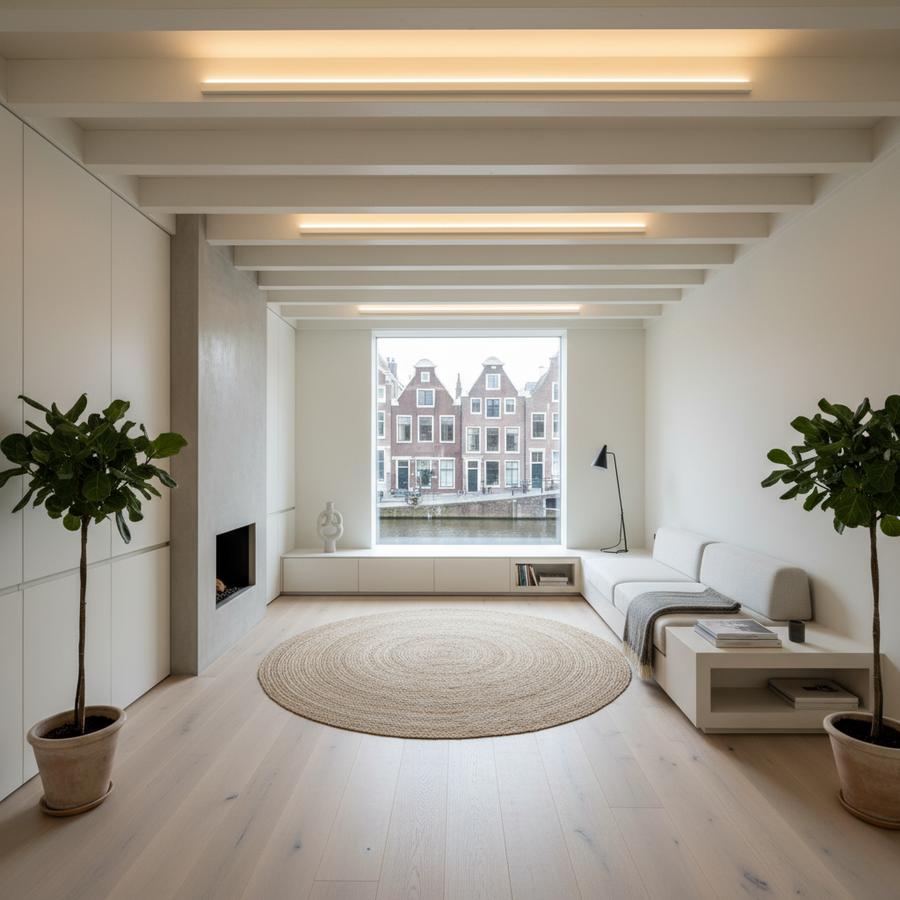
In a canal house, design is the easy part. Logistics is where projects live or die. Those romantic narrow stairs, the gable hoist, the shared stairwell, the soft old timber floors on piles—each decision you make should be shaped by how materials get in, how waste gets out, and how the site breathes day to day. Here is a practical, logistics-first playbook drawn from years of renovating in Amsterdam and Noord-Holland.
Start with the route: stairs, windows, water
Before choosing a kitchen or tile, map the access. Measure every choke point from street to room: front door clear width, stair widths at turns (often 65–80 cm), landing depths, and window openings. Take photos and note the tightest turn. If a single dimension is smaller than your largest item, you have a plan—either split the item, bring it in through a window, or change the spec.
Amsterdam offers three realistic routes beyond the stairs: a verhuislift (external ladder lift), a compact city crane, or the historic gable hoist. All can work, but each has constraints. A verhuislift requires space for the truck and a straight lift path to a window. A crane needs street load capacity and potentially a permit for temporary road closure under the APV (local ordinance). Using the gable hoist is charming but risky and may be restricted, especially on listed facades overseen by Monumentenzorg. Always discuss with your contractor which route matches your street, facade, and schedule.
Permits, neighbors, and VvE: align early
Logistics in the canal belt is civic as much as technical. If you need to occupy pavement, remove a window, or lift over public space, you may require a permit and traffic measures. Build a buffer into your timeline. Neighbors will forgive dust if you’ve warned them, posted clear times, protected the stairwell, and stuck to quiet hours.
In VvE buildings, clarify in writing: allowable working hours, how the main stair will be protected, where waste will be staged, and the route for daily deliveries. Agree on a clean-as-you-go plan for common areas. In Monument properties, temporary removal of sashes or glass should be coordinated in advance and restored like-for-like; plan lead time for glazing beads, putty, and paint to cure.
Staging and phasing: turning 2 m² into a productive site
Canal houses rarely offer a big yard or a ground-floor workshop. Your success depends on a tight staging plan. Reserve a protected 2–3 m² near the work zone for tools and daily materials. Use load-spreading boards over old timber floors to protect the structure and avoid point loads. Create a labelled “last-metre” shelf so the crew doesn’t stack everything in circulation paths.
Split deliveries by phase and room. In Amsterdam’s narrow streets, it’s better to schedule smaller, more frequent drops than one overwhelming pallet you can’t move. Ask suppliers to ship flat-pack or split large elements: worktops in halves with a discreet seam; shower glass in two panels; modular cabinets instead of full carcasses. Most damage and delays happen because one oversized object refuses the final turn.
Protect, contain, and breathe: dust, noise, and structure
Old plaster hates impact and vibration. Wrap handrails, corners, and stair treads in felt and board from day one, and cover finished floors with breathable protection. Build a temporary “dust lock” with zip doors and run a fan to maintain slight negative pressure. Your life will be calmer and your finish sanding shorter.
Noise rules are real. Many Amsterdam districts expect heavy work within business hours only; check your straat/stadsdeel norms and your VvE house rules. Plan the loudest tasks (demolition, drilling through masonry) into condensed blocks and warn neighbors 48 hours ahead. It’s good manners and it reduces complaints that trigger inspections and stoppages.
Mind the structure: pile-founded houses transfer loads differently than modern slabs. Don’t stack tiles, stone, and appliances in one corner. Distribute weight, especially on upper floors. If you bring in a compact crane or place a verhuislift against the facade, confirm with the contractor how loads and vibrations will be managed to protect the kade, basement vaults, and neighbors’ plaster lines.
Waste out, clean in: keep circulation clear
Waste kills flow when it blocks the only staircase. Plan a daily waste route and volume. Big Bags on the quay can be efficient but may need a placement permit; containers often don’t fit. If your street is tight, a smaller van with more trips beats a monster skip you can’t position. For listed facades, avoid scraping bags along stone stoops; install temporary skids and protect edges.
At the end of each day, restore the common areas to clean and safe. Wipe handrails, vacuum the stairwell, remove trip hazards. It’s not just courtesy—it helps you spot small damages early and keeps the project welcome in the building.
Material choices that fit the route
Some materials are logistics-friendly, others fight you. In canal houses, prefer limewash or clay paints (easy touch-up after inevitable scuffs), engineered stone in two pieces instead of a 3-metre slab, oak engineered boards delivered in shorter lengths, and demountable steel for stair balustrades assembled on site. Wet rooms and kitchens benefit from large-format tiles—if they fit—otherwise choose a modular pattern that can be carried in and cut without constant trips outside.
For windows, coordinate any insulated glass upgrades with Monumentenzorg guidelines; sometimes slimline heritage glazing is allowed, but removal/installation must be scheduled alongside the lift day. On energy upgrades, ISDE subsidies won’t help you if your heat pump can’t get up the stairs; choose split systems that are hoistable and check unit weights against your route and floor capacity.
Your logistics-first checklist
- Measure the bottlenecks: record the narrowest stair turn, door, and window opening; compare with every large item.
- Choose your lift route: stairs only, verhuislift, crane, or gable hoist—decide early and book permits if needed.
- Phase deliveries: split by room and week; request flat-pack or split components for the tightest turns.
- Protect structure and finishes: load boards on old floors, felt/board on stairs, dust lock with negative pressure.
- Plan waste removal: daily outflow, Big Bag or van runs, clear path that doesn’t cross incoming materials.
- Align stakeholders: inform VvE/neighbors, agree on hours and stairwell protection, post contact details on the door.
- Confirm compliance: check APV/local permits for street occupation and lifts; review Monumentenzorg constraints if removing windows. See the municipality portal at amsterdam.nl/vergunningen.
When you prioritise logistics, design choices settle themselves: you pick the stone you can actually place, the kitchen that assembles beautifully in a tight room, the insulation upgrade that threads through a historic fabric without drama. That’s the difference between a renovation that drags and one that glides—quiet stair, happy neighbors, and a home that feels inevitable.