
Circular Renovation in Amsterdam: What to Reuse and What to Replace
Circular renovation is not about keeping everything; it is about keeping the right things. In Amsterdam and Noord-Holland, where characterful buildings meet strict regulations and challenging logistics, the most sustainable result often blends meticulous reuse with targeted replacement. Here is how we evaluate what deserves a second life—and where upgrading actually saves more carbon, cash and disruption over the building’s next 30 years.
Why selective reuse beats blanket salvage
The greenest material is the one you already own—until it compromises safety, energy performance or future adaptability. Selective reuse focuses on elements with high embodied value and low operational penalty, while replacing components that will otherwise lock in heat loss, moisture risk or maintenance churn. We design from the inside out: first, stabilise structure and moisture; second, optimise light and comfort; third, celebrate tactility and heritage through retained finishes and fixtures.
Design strategies that bring daylight deep into the plan (think internal voids, lightwells, and glazed partitions) can reduce dependency on artificial lighting and offset the footprint of new interventions. Outdoor threshold spaces—balconies, loggias, inner courtyards—can be built with demountable steel and timber systems so they can be repaired or reconfigured without waste.
What is usually worth reusing—and how
Brick and masonry: Hand-cleaned brick is a Dutch classic for infill, garden walls, or feature reveals. We prefer lime-based mortars for reassembly; they are reversible, vapour-open, and extend the life of old bricks. Broken pieces become hardcore under new screeds.
Solid timber floors and beams: Original oak or pine boards often outlast modern products. We de-nail, re-mill to consistent thickness, and add acoustic mats. Beams that no longer meet span requirements become stair treads, window seats, or shelving—maintaining history without structural compromise.
Terrazzo and natural stone: Terrazzo steps, sills, and vanity tops repolish beautifully. Where pieces are short, we create “stitched” thresholds with brass strips—durable, elegant, and honest about their second life.
Internal doors and ironmongery: Panel doors, rim locks and brass pulls can be refurbished. Fire or acoustic needs? Retain the leaf and add concealed seals and closers, or move originals to non-fire compartments while fitting certified new doors to protected routes.
Cast-iron radiators: If you are staying on gas briefly or moving to low-temperature district heating later, restored radiators paired with thermostatic valves can be efficient. With full electrification, consider reusing only as features connected to a secondary loop or as thermal mass under benches.
Kitchen carcasses and sanitary porcelain: Quality cabinet boxes can be kept, retopped with natural stone or recycled composite, and refaced. Porcelain basins and WCs are hard-wearing; change taps and internals for water efficiency and hygiene.
When replacement is smarter—and still circular
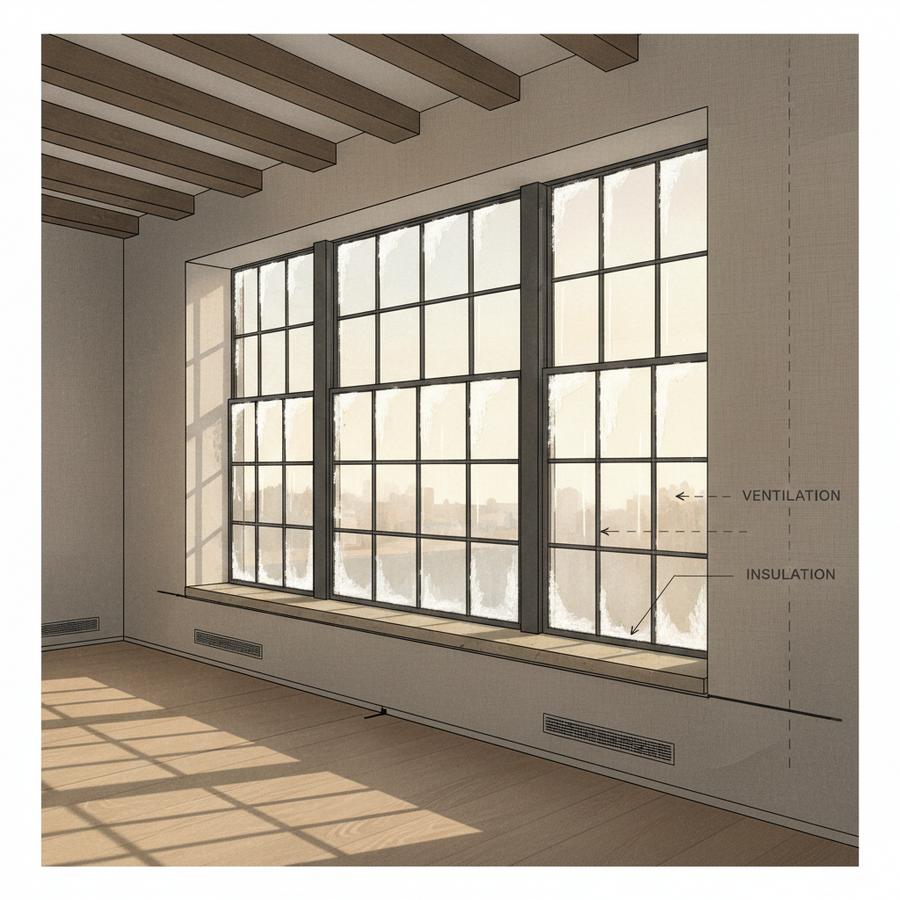
Single glazing and warped frames: Upgrading to slimline double or HR++ glazing in authentic profiles slashes heat loss and improves comfort. If frames are rotten beyond repair, we use FSC-certified hardwood or thermally broken aluminium with identical sightlines, then donate salvageable sashes to local reuse depots.
Old wiring, brittle plumbing and undersized drains: Services that are hidden and life-limiting should be replaced in continuous, legible runs. We route in accessible service zones so future upgrades avoid demolition. Copper and cables are cleanly separated for recycling.
Gutting bad insulation and membranes: Damp, compromised insulation is a health risk. We remove it and rebuild the envelope with vapour-open assemblies. Roofs often merit full replacement of membranes; we add solar-ready anchors so future PV or a solar-thermal array installs without new penetrations.
Heating systems: Phasing to an all-electric heat pump is usually the lowest long-term carbon choice in Noord-Holland’s grid mix. Combine with floor or wall heating, smart zoning, and a small electric radiator in bathrooms for quick comfort bursts. ISDE subsidies can offset the upfront.
Amsterdam and Noord-Holland: constraints that shape circular choices
Monumentenzorg and streetscape rules: In protected canal belts or villages, exterior changes (glazing thickness, frame profiles, rooflines, dormers) face strict review. We often repair existing frames and fit slimline units or secondary glazing internally to meet energy targets without altering façades. Interior features—stair balusters, beams, plasterwork—may be “character-defining”; we document, protect, and detail reversible upgrades so approvals move faster. For apartments, a VvE majority is usually required for façade or roof interventions; early alignment prevents expensive redesigns.
Logistics, narrow stairs and canal access: Many homes have steep, narrow staircases and no lift. Circular planning reduces waste by prefabricating demountable modules sized for window hoists or canal-barge delivery. We schedule heavy moves within permitted noise hours and use reusable floor protection to avoid damage to retained finishes. Where windows must be temporarily removed to crane items in, we combine the operation with joinery refurbishment to save a second mobilization.
Ground, moisture and performance realities in the region
Pile foundations and settlement: Much of Amsterdam rests on timber or concrete piles. Before reusing heavy stone or adding new wet rooms, we verify capacity and settlement. Strategic lightening—like switching to timber or cork-based subfloors—can safely enable circular reuse of interior elements without overloading the structure.
Energy labels, BENG targets and ISDE: While deep energy compliance (BENG) mainly applies to new construction, improving your energy label significantly influences value and financing. In renovations, we prioritise airtightness at window-to-wall interfaces, insulate roof and crawlspace where feasible, and electrify heat with ISDE-supported equipment (heat pumps, solar boilers). These upgrades justify replacing leaky components while letting high-embodied finishes—brick, timber, stone—shine for decades.
Budget, sourcing and specification without greenwash
Where to find quality reuse: Architectural salvage yards, certified demolition brokers, and circular hubs supply graded timber, bricks, and fixtures. We only accept items with traceable origin and condition reports. Lead paint and asbestos testing is non-negotiable before any reuse or refinishing.
Specs that extend service life: Choose finishes you can refinish, not replace: solid timber, limewash, powder-coated steel, real stone. Design with standardised modules and screw-fix assemblies so future owners can repair, swap or return components to a reuse stream. Document all materials and serial numbers in a digital logbook for VvE continuity and warranties.
Your circular renovation checklist
- Commission a pre-renovation survey: structure, moisture, services, and hazardous materials; include foundation checks if adding weight.
- Set non-negotiables: energy targets, budget, heritage priorities; define what must perform like new (glazing, services) versus what can be refurbished.
- Design for disassembly: plan accessible service zones, standardised fixings, and modular dimensions sized for your staircase or window hoist.
- Audit existing materials: tag what to restore, repurpose or recycle; get unit costs for repair versus replacement, including logistics.
- Sequence works to protect retained elements: temporary coverings, dust zoning, and off-site restoration of doors, radiators and stone.
- Leverage incentives: apply early for ISDE; align VvE votes and Monumentenzorg approvals before final procurement.
- Track the loop: maintain a materials passport, warranties and maintenance plan so components keep their second—and third—life.
Done well, circular renovation does not feel compromised; it feels considered. You keep the soul, upgrade the performance, and make future changes easier—exactly what Amsterdam’s buildings, and their owners, deserve.