
17 December 2025 · 6 min read
Vitreon Steel Bathrooms: Lightweight Luxury for Amsterdam's Historic Homes
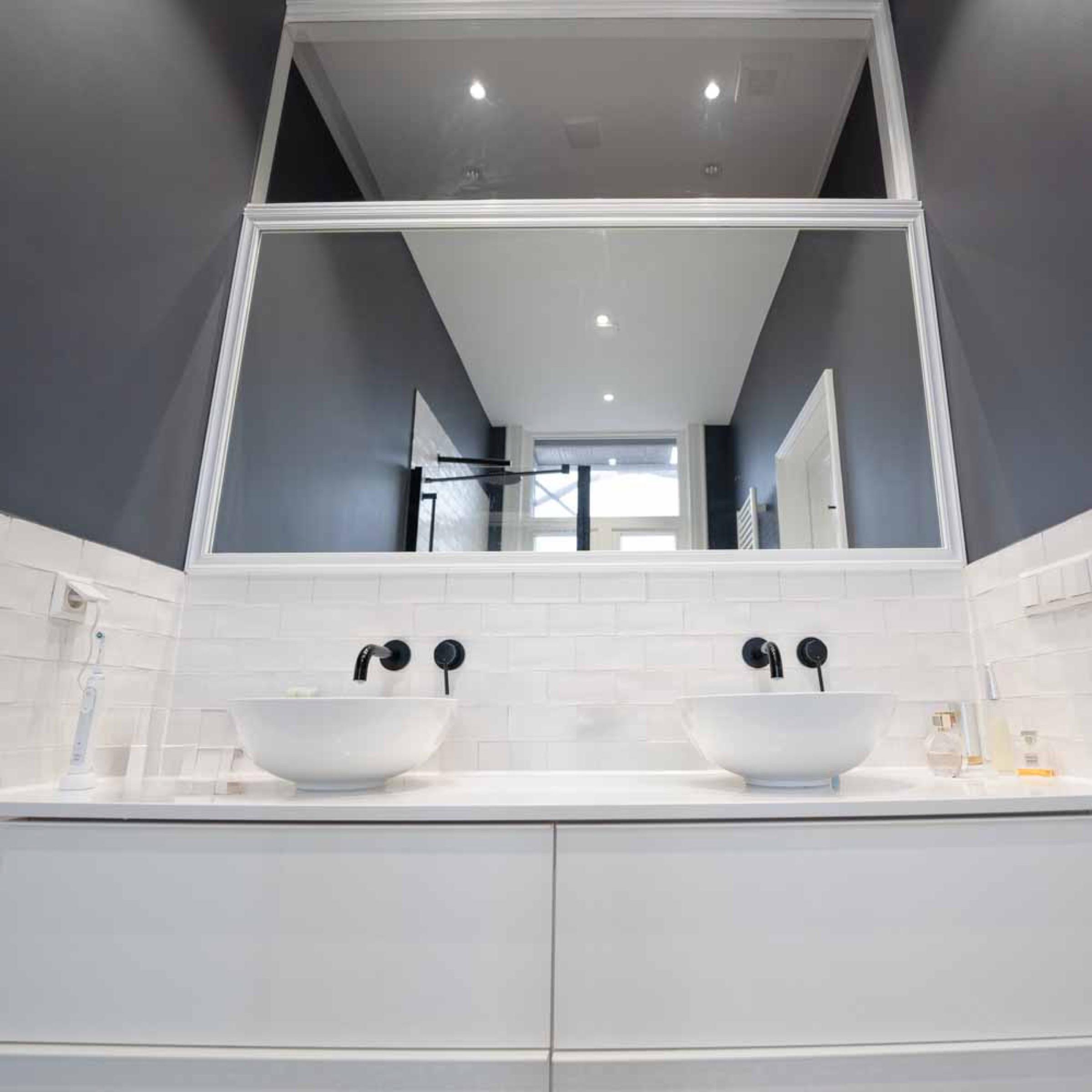
Bathroom materials are evolving fast, and one of the most interesting recent launches is Laufen’s Vitreon steel, a glassy steel surface with a deep, atmospheric palette and refined metallic warmth. As reported by Dezeen, the range introduces darker tones and an architectural rhythm to washbasins and complementary pieces. Beyond the styling, this signals a broader shift toward lightweight, durable, and fully recyclable solutions that suit the unique structural and regulatory realities of historic Dutch housing.
What is Vitreon steel and why should homeowners care?
Vitreon steel is best understood as a vitreous (glassy) enamel fused to a precision-formed steel substrate. Think of it as a highly resilient skin-on-bone system: the enamel provides a non-porous, stain-resistant, hygienic surface, while the steel delivers strength with comparatively low weight. Unlike many ceramic pieces, enamelled steel items can be slimmer, easier to transport through tight stairwells, and kinder to older timber floor structures.
For high-use wet spaces, the benefits are practical. The non-porous glaze resists discoloration and limescale adhesion better than many porous stones. It is easy to clean with mild, non-abrasive agents, and the edge profiles can be crisper without sacrificing robustness. The caveats are equally important: steel can be acoustically lively without proper damping, and enamel can chip if struck by heavy, sharp objects. High-quality models mitigate both with factory-applied sound pads and toughened enamel formulas, but detailing and installation still make or break performance.
Sustainability and lifecycle in the Dutch context
Steel has a clear circular pathway: it is widely recyclable, and many European producers run high recycled content through electric arc furnaces. The enamel coating is inert and VOC-free when cured. From a lifecycle perspective, the key sustainability questions are the recycled content of the steel, energy source used in production, and the product’s Environmental Product Declaration (EPD). Ask your supplier for an EPD and evidence of recycled content and responsible steel sourcing. Reuse and end-of-life separability are strong points for enamelled steel compared with composite resins.
For homeowners targeting better comfort and lower operational impact, a bathroom upgrade won’t change an energy label on its own, but it can support broader goals. Pair new sanitaryware with a water- and energy-efficient domestic hot water strategy (for example, a warmtepompboiler). The Dutch ISDE subsidy supports measures such as heat pumps and certain insulation packages; if you plan a combined works program, check eligibility early via the RVO portal (ISDE).
Amsterdam realities: grachtenpanden, monuments, and logistics
Historic Amsterdam canal houses and 19th-century blocks present a familiar trio of constraints: access, structure, and heritage oversight. Narrow staircases and steep treads make logistics a primary design driver. Here, Vitreon steel’s lower weight and slimmer profiles offer a real advantage compared with bulky ceramic elements. In many cases, items can be walked in without a costly city crane permit, reducing time, risk, and street disruption. For upper-level apartments, this can be the difference between a one-day and a multi-day installation.
Structurally, many Amsterdam and Noord-Holland homes sit on timber joists carried by masonry walls over pile foundations. Extra dead load in wet rooms is always a concern, especially when converting a former bedroom to a bathroom. Lightweight basins, trays, and even steel tubs ease the load case. Your contractor should verify joist spans and bearings, check moisture history, and, if necessary, design a distributed load platform. Where the home is a designated monument, Monumentenzorg priorities include reversibility and minimal intervention to historic fabric. Wall-hung Vitreon steel basins with concealed frames can meet these goals by avoiding heavy masonry plinths and allowing services to be run within a reversible lining system.
Performance and detailing: acoustics, warmth, and hygiene
Two perceived drawbacks of steel fixtures are sound and temperature. Good products address both, but installation must finish the job. Add acoustic damping mats under trays and behind basins, decouple fixings from brittle walls, and ensure a continuous sound break around perimeters. This helps meet the spirit of Dutch acoustic ambitions (consider NEN 5077 performance targets in multi-family buildings) and keeps neighbors happier in VvE contexts.
Thermally, steel conducts heat quickly, so a bath cools faster than an acrylic equivalent unless insulated. Specify factory insulation or add a thin closed-cell insulation layer beneath tubs and trays. Pair with a thermostatic mixing set and consider a point-of-use circulation strategy to reduce water purges. Amsterdam’s water hardness (typically moderate) means limescale can show on dark, glossy surfaces; choose a micro-etched or satin enamel if you prefer a low-maintenance aesthetic, and incorporate a weekly mild descaling routine.
Waterproofing remains non-negotiable under the new Bbl (successor to Bouwbesluit 2012). Use a full wet-room membrane with corner bands, flood test before tiling or cladding, and respect NEN 3215 drainage slopes and venting to avoid trap suck-out. In heritage settings, prioritize vapor-open finishes outside the immediate wet zone to preserve the hygrothermal behavior of old brick and lime plasters.
Costs, compatibility, and procurement
Vitreon steel is a high-spec material; expect pricing above standard ceramic basins but typically below bespoke stone. Value emerges through reduced logistics, faster installation, and durability. Ensure compatibility with in-wall carriers (e.g., Geberit, TECE) and use stainless fixings to avoid galvanic issues. For apartments, confirm VvE approvals, water shut-down windows, and noise windows for drilling. Obtain an Omgevingsvergunning if altering protected heritage fabric or facades; check your situation via the Omgevingsloket (Omgevingsloket).
Practical checklist for homeowners
- Scope and permits: Verify if your home is a municipal or national monument and pre-check permit needs with Monumentenzorg via the Omgevingsloket. For apartments, secure VvE consent early.
- Structure and acoustics: Have a contractor or engineer assess timber joists, spans, and load paths. Specify damping mats and perimeter decoupling for steel basins, trays, and tubs.
- Waterproofing and drainage: Design a continuous membrane with pre-formed corners, flood test, and detail NEN 3215-compliant slopes and ventilation to avoid gurgling and odor issues.
- Product due diligence: Request EPDs, recycled content declarations, and enamel slip ratings (seek R10 or higher for shower zones). Test a finish sample against your cleaning routine.
- Systems integration: Coordinate with in-wall carriers, concealed mixers, and underfloor heating. If upgrading hot water, explore ISDE eligibility for a warmtepompboiler.
- Logistics plan: Measure stair turns and door widths; prefer modular, lightweight items like Vitreon steel basins. Avoid crane lifts where possible to cut cost and risk.
- Aftercare: Establish a maintenance plan: mild pH cleaners, soft cloths, periodic descaling, and prompt touch-up of any chips with manufacturer kits.
For Amsterdam and Noord-Holland homeowners, Vitreon steel is not just a new finish; it is a strategic material choice that aligns with the realities of historic buildings: tight access, sensitive structures, and the need for reversible, durable interventions. When combined with good detailing, proper approvals, and a smart hot water strategy, it can deliver the calming minimalism many of us want without compromising heritage or comfort.